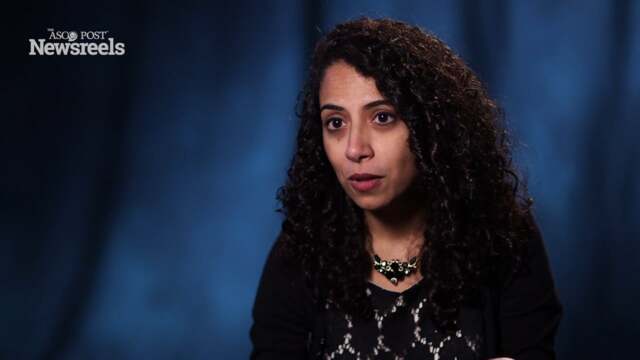
Heather A. Wakelee, MD, on Results of the E1505 Clinical Trial
2015 IASLC World Conference on Lung Cancer
Heather A. Wakelee, MD, of Stanford University discusses the study that explored the question of whether adding bevacizumab to adjuvant chemotherapy is beneficial in the setting of resected non–small cell lung cancer (Abstract PLEN04.03).
James L. Mulshine, MD
James L. Mulshine, MD, of Rush University Medical Center, discusses the profound challenges of implementing national CT screening to ensure delivery of high-quality, best-practice early lung cancer detection in the target population of tobacco-exposed individuals (Abstract MS 15.01).
William D. Travis, MD
William D. Travis, MD, of Memorial Sloan Kettering Cancer Center, gives an update on the WHO classification, which is crucial for optimal personalized treatment of lung cancer patients (Abstract PLEN02.01).
Philip Bonomi, MD
Philip Bonomi, MD, of Rush Medical College, summarizes the findings on anamorelin and its use in advanced NSCLC for improvement in anorexia/cachexia symptoms (Abstracts ORAL 29.01, ORAL 29.02).
Karen Kelly, MD
Karen Kelly, MD, of the University of California, Davis, summarizes three important papers on NSCLC: expression as a predictive biomarker; pembrolizumab, immune-mediated adverse events, and corticosteroid use; and an evaluation of disease-related symptoms in patients treated with nivolumab or docetaxel (Abstracts ORAL 31.01, 31.02, and 31.03).
Nagashree Seetharamu, MD
Nagashree Seetharamu, MD, of the North Shore LIJ Health System, discusses serum AGA-signatures that may provide a minimally invasive test for early detection of lung cancer risk (Abstract P3.04-085).