Barbara J. Gitlitz, MD: Genomics of Young Lung Cancer Study
2015 IASLC World Conference on Lung Cancer
Barbara J. Gitlitz, MD, of USC/Norris Cancer Center, discusses the first prospective study on the genomic drivers and demographics of lung cancer in patients under 40 who took part in the study remotely via the Internet (Abstract ORAL22.05).
Ugo Pastorino, MD
Ugo Pastorino, MD, of the Istituto Nazionale dei Tumori Foundation, discusses his study, which showed that stopping smoking before or during low-dose computed tomography screening reduced overall mortality by more than 25%, a benefit that is three- to fivefold greater than this type of screening (Abstract PLEN04.07).
Silvia Novello, MD, PhD
Silvia Novello, MD, PhD, of the University of Turin, discusses a much-neglected aspect of lung cancer: It is not just the province of men; women are affected in great numbers as well.
Christine D. Berg, MD
Christine D. Berg, MD, of Johns Hopkins Medicine, discusses how increased insurance coverage should dramatically increase lung cancer screening. If done correctly—which will be a challenge—screening will help improve the prognosis of patients with lung cancer (Abstract PLEN 01.01).
Eric Lim, MD
Eric Lim, MD, of the Royal Brompton and Harefield NHS Trust, discusses his findings on the nonspecific symptoms of never-smokers, which suggests that imaging could play a more important role in diagnosing these patients at an earlier stage.
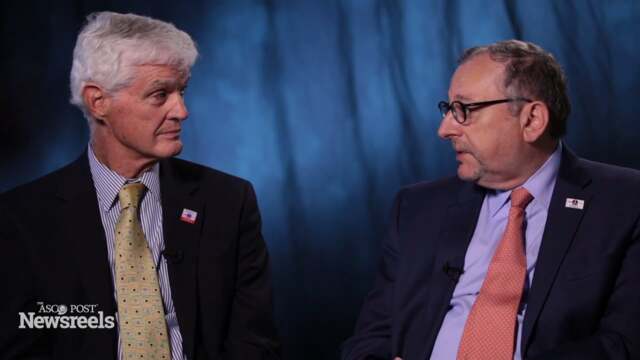
Fred R. Hirsch, MD, PhD and Paul A. Bunn, Jr., MD
Fred R. Hirsch, MD, PhD, of the University of Colorado Health Science Center, and Paul A. Bunn, Jr, MD, of the University of Colorado Cancer Center, give their views on the goals and important presentations of the 2015 World Conference on Lung Cancer.