Martine Frouws, MSc, PhD, on Postdiagnosis Aspirin and Improved Survival in All GI Cancers
2015 European Cancer Congress
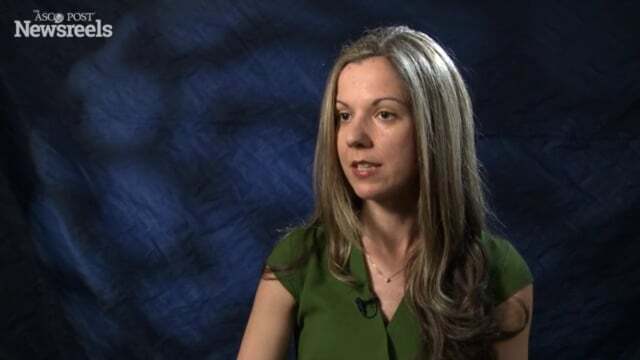
Martine Frouws, MD, PhD Candidate, of Leiden University Medical Centre discusses her study, which showed a significant increase in overall survival among patients with GI cancers who took aspirin compared to those who did not (Abstract 2306).
Priscilla K. Brastianos, MD
Priscilla K. Brastianos, MD, of Massachusetts General Hospital, discusses genomic characterization of brain metastases and paired primary tumors, which could reveal potential therapeutic targets (Abstract 2905).
Benjamin Besse, MD, PhD, and Tony Mok, MD
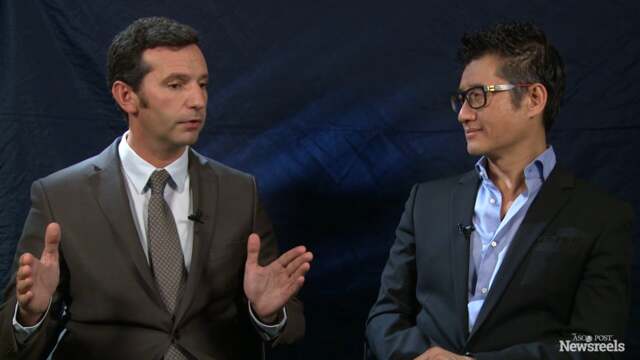
Benjamin Besse, MD, PhD, of the Institut Gustave Roussy, and Tony Mok, MD, of The Chinese University of Hong Kong, discuss this phase II trial of atezolizumab as first-line or subsequent therapy for locally advanced or metastatic PD-L1–selected NSCLC (Abstract 17LBA).
A. Oliver Sartor, MD
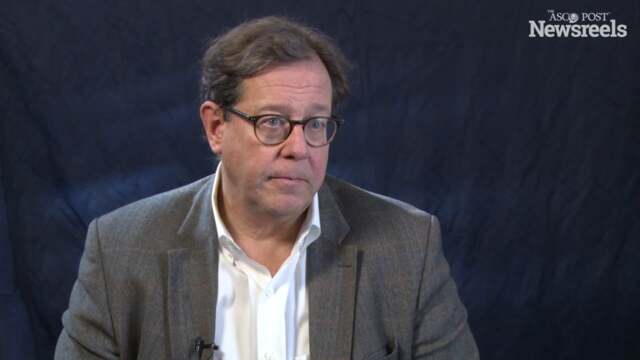
A. Oliver Sartor, MD, of Tulane University School of Medicine, discusses the latest results of a clinical trial on radium-223 dichloride and the improvement in overall survival of men with advanced prostate cancer (Abstracts 2510, 2530).
Mary K. Gospodarowicz, MD
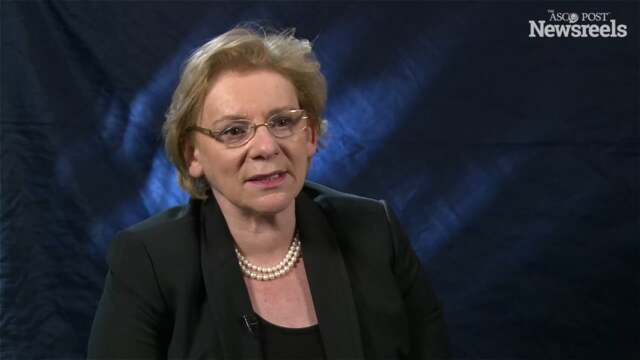
Mary K. Gospodarowicz, MD, of Princess Margaret Hospital, discusses the work of the Global Task Force on Radiotherapy for Cancer Control and its efforts to improve access to vital radiation treatment worldwide, especially in low- and middle-income countries.
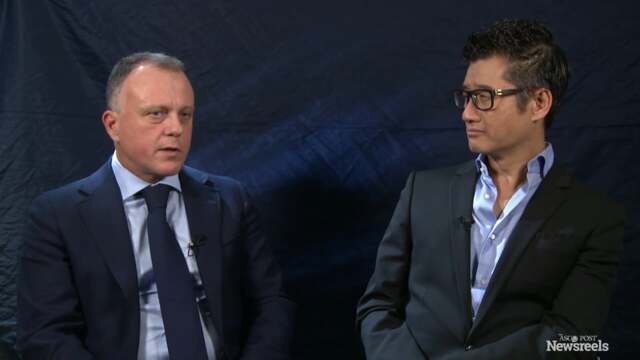
Federico Cappuzzo, MD, and Tony Mok, MD
Federico Cappuzzo, MD, of Istituto Toscano Tumori-Ospedale Civile Livorno, and Tony Mok, MD, of The Chinese University of Hong Kong, discuss current strategies for treating patients with acquired resistance, and what the future holds for these patients.