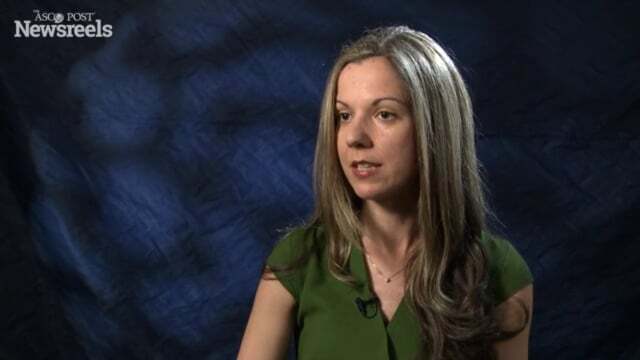
Christoph Zielinski, MD: Highlights of 2015 European Cancer Congress
2015 European Cancer Congress
As Chair of the ECC Local Organizing Committee, Christoph Zielinski, MD, of the Medical University Vienna - General Hospital, shares his thoughts on the important goals and presentations of the 2015 Congress.
Brian I. Rini, MD
Brian I. Rini, MD, of the Cleveland Clinic Taussig Cancer Institute, discusses the results from a phase III study investigating a multipeptide cancer vaccine in patients receiving sunitinib as first-line therapy for advanced/metastatic renal cell carcinoma (Abstract 17LBA).
Rolf A. Stahel, MD
Rolf A. Stahel, MD, of University Hospital, Zurich, discusses this phase II trial of erlotinib and bevacizumab in patients with advanced, EGFR-mutated non-small cell lung cancer without T790M mutation. The study was sponsored by The Spanish Lung Cancer Group and the European Thoracic Oncology Platform (Abstract 3BA).
Jean-Charles Soria, MD, PhD
Jean-Charles Soria, MD, PhD, of Gustave Roussy, summarizes an important study: the efficacy and safety of pembrolizumab in previously treated non-small cell lung cancer (Abstract LBA33).
Tony Mok, MD, and Alice Shaw, MD, PhD
Tony Mok, MD, of The Chinese University of Hong Kong, and Alice Shaw, MD, PhD, of Massachusetts General Hospital, discuss the current status and future outlook of ALK inhibition, and an assessment of brigatinib CNS activity in patients with ALK-positive non-small cell lung cancer and intracranial metastases (Abstract 3061).
Priscilla K. Brastianos, MD
Priscilla K. Brastianos, MD, of Massachusetts General Hospital, discusses genomic characterization of brain metastases and paired primary tumors, which could reveal potential therapeutic targets (Abstract 2905).