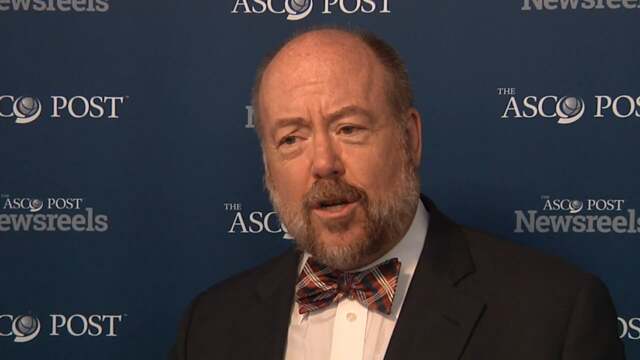
Ruben A. Mesa, MD, and James O. Armitage, MD, Results of the PERSIST-1 Study on Myelofibrosis
2015 ASCO Annual Meeting
James O. Armitage, MD, of The University of Nebraska Medical Center, and Ruben A. Mesa, MD, of the Mayo Clinic, discuss pacritinib and its significant efficacy in myelofibrosis (Abstract LBA7006).
Maura N. Dickler, MD and Clifford A. Hudis, MD
Clifford A. Hudis, MD, and Maura N. Dickler, MD, of Memorial Sloan Kettering Cancer Center, discuss adding bevacizumab to letrozole as a first-line endocrine therapy for treatment of hormone receptor–positive advanced breast cancer (Abstract 501).
Sagar Lonial, MD, and James O. Armitage, MD
James O. Armitage, MD, of the University of Nebraska Medical Center, and Sagar Lonial, MD, of Emory University School of Medicine, discuss results from two important studies that tested lenalidomide/dexamethasone with or without elotuzumab and daratumumab monotherapy (Abstracts 8508 and LBA8512).
Daniel A. Vorobiof, MD, and Bernardo Leon Rapoport, MD
Daniel A. Vorobiof, MD, of the Sandton Oncology Centre, and Bernardo Leon Rapoport, MD, of The Medical Oncology Centre of Rosebank, discuss the first study to evaluate the efficacy and safety of a single dose of intravenous fosaprepitant. The use of this NK1 inhibitor and another (rolapitant) in a second study discussed may change the management of chemotherapy-induced nausea and vomiting and improve quality of life for patients (Abstracts 9629 and 9615).
Saad Usmani, MD
For a heavily pretreated multiple myeloma population, daratumumab as a monotherapy showed meaningful, durable activity with deep responses and a favorable safety profile. Saad Usmani, MD, of the Levine Cancer Institute, provides the highlights of this study on the first monoclonal antibody to show promise in multiple myeloma (Abstract LBA8512).
Charles F. von Gunten, MD, PhD
Charles F. von Gunten, MD, PhD, of OhioHealth Kobacker House discusses the ROMANA 1 and 2 trials on cachexia in NSCLC and a study on olanzapine vs fosaprepitant for the prevention of nausea and vomiting (Abstracts 9500 and 9502).