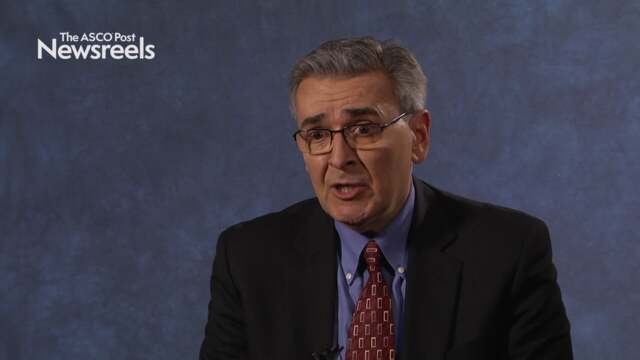
Eun-Sil Shelley Hwang, MD, on DCIS: Results of the CALGB 40903 Trial
2017 San Antonio Breast Cancer Symposium
Eun-Sil Shelley Hwang, MD, of Duke University Medical Center, discusses study findings on primary endocrine therapy for estrogen receptor–positive ductal carcinoma in situ (Abstract GS5-05).
Sibylle Loibl, MD, PhD, of the German Breast Group, discusses a study evaluating palbociclib plus endocrine treatment vs a chemotherapy-based treatment strategy in patients with hormone receptor–positive, HER2-negative metastatic breast cancer (Abstract OT3-05-04).
Wolfgang Janni, MD, PhD, of Ulm University, discusses study findings that showed extended adjuvant bisphosphonate treatment over 5 years in early breast cancer does not improve disease-free and overall survival when compared with 2 years of treatment (Abstract GS1-06).
Melinda Telli, MD, of the Stanford University School of Medicine, discusses the current status of treatment for advanced TNBC, and new therapeutic strategies now being used for better outcomes.
Debu Tripathy, MD, of The University of Texas MD Anderson Cancer Center, discusses phase III study findings on first-line ribociclib vs placebo with goserelin and tamoxifen or a nonsteroidal aromatase inhibitor in premenopausal women with hormone receptor–positive, HER2-negative advanced breast cancer (Abstract GS2-05).
Joseph A. Sparano, MD, of Montefiore Medical Center/Albert Einstein College of Medicine, discusses findings that suggest circulating tumor cells 5 years after diagnosis are prognostic for late recurrence in operable stage II–III breast cancer (Abstract GS6-03).