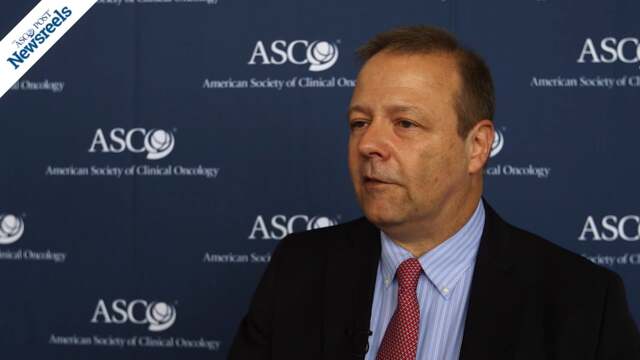
Solange Peters, MD, PhD, on SCLC: Expert Perspective on CheckMate 032
2017 ASCO Annual Meeting
Solange Peters, MD, PhD, of the University of Lausanne, examines the study findings on nivolumab ± ipilimumab in advanced small cell lung cancer, in the first report of a randomized expansion cohort. (Abstract 8503)
Gunter von Minckwitz, MD, of the German Breast Group, discusses study findings on a randomized comparison of chemotherapy, trastuzumab, and placebo vs chemotherapy, trastuzumab, and pertuzumab as adjuvant therapy in patients with HER2-positive early breast cancer. (Abstract LBA500)
Karim Fizazi, MD, PhD, of the University Paris-Sud, discusses study findings on androgen-deprivation therapy with abiraterone acetate plus prednisone or placebos in newly diagnosed high-risk metastatic hormone-naive prostate cancer. (Abstract LBA3)
Dean F. Bajorin, MD, of Memorial Sloan Kettering Cancer Center, and Peter H. O’Donnell, MD, of The University of Chicago Medical Center, discuss their study findings on treating advanced urothelial cancer with pembrolizumab, paclitaxel, docetaxel, or vinflunine. (Abstracts 4501 and 4502)
Elizabeth R. Plimack, MD, of Fox Chase Cancer Center, discusses highlights of three important abstracts on advanced and metastatic urothelial cancer presented at the 2017 ASCO Annual Meeting. (Abstracts 4501, 4503, 106)
Axel Grothey, MD, of the Mayo Clinic Rochester, discusses study findings on shortening the duration of adjuvant oxaliplatin-based therapy, linked to neurotoxicity, for patients with stage III colon cancer. (Abstract LBA1)