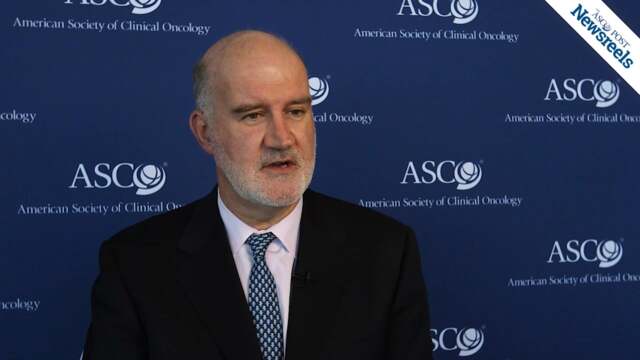
Ann-Lii Cheng, MD, PhD, on Hepatocellular Carcinoma: Trial Results on Lenvatinib vs Sorafenib
2017 ASCO Annual Meeting
Ann-Lii Cheng, MD, PhD, of the National Taiwan University Hospital, discusses phase III study findings on lenvatinib vs sorafenib in first-line treatment of patients with unresectable hepatocellular carcinoma. (Abstract 4001)
David H. Henry, MD, of Pennsylvania Oncology Hematology Associates, and Ruben A. Mesa, MD, of the Mayo Clinic Cancer Center, discuss phase III study findings on momelotinib vs ruxolitinib in JAK inhibitor–naive patients with myelofibrosis. (Abstract 7000)
Jane McNeil Beith, MD, PhD, of Chris O’Brien Lifehouse, discusses long-term study results on a psychological intervention, called “Conquer Fear,” designed to reduce clinical levels of fear of cancer recurrence in breast, colorectal, and melanoma cancer survivors. (Abstract LBA10000)
Elizabeth J. Shpall, MD, of The University of Texas MD Anderson Cancer Center, and recipient of the 2017 Women Who Conquer Cancer Mentorship Award, discusses promoting women in oncology with Nina Shah, MD, of the University of California, San Francisco, the protégé who nominated Dr. Shpall for this recognition.
Temidayo Fadelu, MD, of Dana-Farber Cancer Institute, discusses study findings on nut consumption and survival in stage III colon cancer patients. Higher consumption of nuts may be associated with significantly reduced cancer recurrence and death in this group. (Abstract 3517)
David I. Quinn, MBBS, PhD, of the University of Southern California, gives his expert perspective on the planned survival analysis from a phase III open-label study of pembrolizumab vs paclitaxel, docetaxel, or vinflunine in recurrent, advanced urothelial cancer. (Abstract 4501)