
A response-adapted approach to treatment decision-making for patients with resectable cutaneous squamous cell carcinoma demonstrated that with the use of neoadjuvant pembrolizumab, many patients could avoid surgery and/or radiotherapy.
Findings from the De-Squamate study were published in the Journal of Clinical Oncology showing that many patients achieved a clinical or pathologic complete response from treatment with pembrolizumab alone, without surgical and/or radiotherapy intervention.1

Rahul Ladwa, MBChB, MPhil, BSc, FRACP
“The De-Squamate study design and its results provide a rationale for using a multimodal response assessment incorporating 18F-FDG-PET imaging and targeted biopsy to guide the management of patients with resectable cutaneous squamous cell carcinoma after pembrolizumab and warrant further investigation against standard-of-care treatments,” the study authors, led by Rahul Ladwa, MBChB, MPhil, of Princess Alexandra Hospital in Brisbane, Australia, wrote in their published report. “It supports the use of pembrolizumab to avoid major surgery and radiotherapy without compromising disease-free survival in patients with resectable stage II-IV cutaneous squamous cell carcinoma achieving a clinical or pathological complete response.”
Background and Study Design
Patients with locally advanced or metastatic cutaneous squamous cell carcinoma have shown significant and durable responses to immunotherapy, including approved agents pembrolizumab and cemiplimab. Cemiplimab has also been explored in the neoadjuvant setting to examine pathologic responses to immunotherapy, and it showed a 51% rate of pathologic complete response in patients with resectable stage II to IV cutaneous squamous cell carcinoma in a phase II trial.2
Investigators wanted to determine if treatment for patients with resectable disease could be de-escalated following immunotherapy and to look at how multimodal assessment of early responses could be used to inform further treatment decisions. They conducted the small, prospective, multicenter, nonrandomized phase II De-Squamate trial to look at early responses to pembrolizumab as a way to inform subsequent treatment needs. The study enrolled 27 patients with resectable stage II, III, or IV nonmetastatic cutaneous squamous cell carcinoma in Australia. Only patients who had not previously received radiotherapy for cutaneous squamous cell carcinoma were eligible to participate in the study.1
Patients received 200 mg intravenous pembrolizumab once every 3 weeks for up to four cycles followed by imaging assessments, including 18F-FDG-PET. If the patient had a clinical complete response or complete metabolic response plus negative ultrasound-guided mapping biopsies of the target side, they did not need to proceed to surgery or radiotherapy. All other patients proceeded to surgical resection and pathologic assessment. If they then had a pathologic complete or major response, by two independent lab assessments, they could avoid adjuvant radiotherapy. Patients then received 13 additional cycles of maintenance pembrolizumab and were followed for 3 years. If a patient had to discontinue pembrolizumab early, they could be referred for earlier surgery.
The primary endpoint was the rate of clinical or pathologic complete response after up to four initial cycles of pembrolizumab. The secondary endpoint was the rate of treatment de-escalation.
Study Findings
Of the 27 participating patients, the median age was 77 (range = 59–90) and 89% were male. The most common primary anatomic tumor site was the head and neck in 89%. A total of 67% had stage IV disease without metastasis and 59% had nodal metastasis.
Eighty-one percent of patients received all four initial doses of pembrolizumab; the other four patients experienced progressive disease, and three of these went on to surgery.
Seventeen patients (63%) achieved a clinical or pathologic complete response (95% confidence interval [CI] = 42%–80%), including a clinical complete response in 48% and a pathologic complete response in 15%. All of these patients were able to avoid surgical resection and/or adjuvant radiotherapy. The 13 patients who achieved a clinical complete response achieved total de-escalation.
The objective response rate was 66% (95% CI = 50%–80%), with complete responses in 22% of patients and partial responses in 44%. Complete metabolic responses were reported in 56% (95% CI = 40%–70%), which included all patients who achieved a clinical complete response.
Two patients with complete response and complete metabolic response did not get a mapping biopsy because of safety concerns in one patient with periorbital cutaneous squamous cell carcinoma and no identifiable target lesion in the other.
Four patients with a pathologic complete response had achieved a partial response to pembrolizumab treatment, but during FDG-PET assessment, complete metabolic responses were observed in two patients and partial metabolic responses were seen in the other two. The two patients with a complete metabolic response were recommended for surgery because residual disease was observed during radiologic assessment.
Six patients received adjuvant radiotherapy and one declined further treatment. Clinicians recommended maintenance pembrolizumab for 19 patients, including 17 patients who had achieved a clinical or pathologic complete response and 2 who had a pathologic partial response. Of these, 16 patients accepted maintenance therapy, and 14 completed all 13 cycles.
At 18 months, events had occurred in 26% of patients, for an event-free survival rate of 74%. No recurrences were reported in patients who had achieved a clinical or pathologic complete response. In these patients, the 1-year event-free survival rate was 94% (95% CI = 76%–99%) and the median was not yet reached compared with a 1-year rate of 40% (95% CI = 15%–70%) and a median event-free survival of 7 months (95% CI = 0–14.7) in patients who did not achieve a clinical or pathologic complete response.
Adverse events regardless of attribution were reported in 89% of patients, most commonly fatigue (37%), pruritus (37%), diarrhea (26%), nausea (26%), and arthralgia (22%). Grade 3 adverse events were observed in 26% of patients, grade 4 events in 4%, and grade 5 events in 11%. None of the grade 5 adverse events were considered related to treatment.
Treatment-related adverse events were observed in 74% of patients and immune-related adverse events were reported in 30%. One patient discontinued pembrolizumab due to a treatment-related event, which occurred during the maintenance phase.
DISCLOSURE: The study was supported in part by an investigator-initiated study grant from Merck Sharp and Dohme Australia. For full author disclosures, visit ascopubs.org.
REFERENCES
- Ladwa R, Lee JH, McGrath M, et al: Response-adapted surgical and radiotherapy de-escalation in resectable cutaneous squamous cell cancer using pembrolizumab: the De-Squamate study. J Clin Oncol. July 21, 2025 (early release online).
- Gross ND, Miller DM, Khushalani NI, et al: Neoadjuvant cemiplimab for stage II to IV cutaneous squamous-cell carcinoma. N Engl J Med 387:1557-1568, 2022.
EXPERT POINT OF VIEW
Nikhil I. Khushalani, MD, Vice Chair for the Department of Cutaneous Oncology at Moffitt Cancer Center, and Soo Park, MD, Assistant Professor of Medicine, UC San Diego Health, commented on the greater context and next steps for this research.
“The De-Squamate trial in cutaneous squamous cell carcinoma (CSCC) is a simple, yet elegant demonstration of adaptive de-escalation of multimodal therapy in this disease where surgery and radiotherapy have traditionally been the mainstay of treatment. Given the success of anti–PD-1 immune checkpoint blockade in CSCC as definitive therapy for advanced, unresectable disease, and as neoadjuvant therapy for high-risk resectable disease, the investigators provocatively asked if pembrolizumab alone may permit complete or partial avoidance of local therapy in patients with resectable CSCC. Their results clearly support this hypothesis.
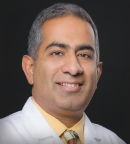
Nikhil I. Khushalani, MD

Soo Park, MD
This trial mimics real-world discussions we routinely have in our tumor boards on optimal management of these patients. Is the therapy we administer just enough, too much, or not adequate to effect a cure? What is clear from this small data set is that patients with CSCC with complete clinical and pathologic response to just four cycles of pembrolizumab have excellent outcomes. Longer follow-up and a larger trial to confirm this finding are the logical next steps.
Perhaps more importantly, we should also ask if the maintenance dosing of pembrolizumab up to 1 year is even necessary for those patients achieving a complete response to the initial four doses (ie, de-escalation of systemic therapy, too!).Conversely, should the same drug be continued after surgery for pathologic nonresponders (is giving more of an ineffective therapy going to alter a bad outcome?) or should we adapt the postoperative systemic therapy in these nonresponders to another drug class? Future investigation should also include patient-reported outcome data, given the potential of immune checkpoint blockade to cause chronic, potentially life-altering toxicity, such as adrenal insufficiency (7% incidence in this trial).
So now, when a patient with CSCC who experiences an excellent response with upfront anti–PD-1 therapy asks if surgery (and/or radiation) is even necessary, we can reassure them that less therapy, indeed, may be adequate based on the early results of the De-Squamate trial.”
DISCLOSURES: Dr. Khushalani serves on the Consultant/Advisory Board/Steering Committee of Bristol Myers Squibb, Castle Biosciences, Delcath, Immunocore, Instil Bio, IO Biotech, Iovance Biotherapeutics, Merck, Mural Oncology, MyCareGorithm, Nektar, Novartis, Regeneron Pharmaceuticals, Replimune, and Sun Pharmaceuticals. Research funded by BMS, Biontech, Merck, Celgene, GSK, HUYABIO international, Replimune, Regeneron, Novartis, IDEAYA, and Modulation Therapeutics. Dr. Park has served as a consultant for Regeneron and Sun Pharma and receives research funding from Bristol Myers Squibb.
