
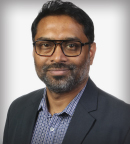
MUHAMMAD RAFIQUL ISLAM, MBBS, MD, MsPH, FACP
To be a mid-career oncologist is to occupy an emotionally and physically taxing space within a trying clinical environment. We may be 10 years and beyond our post-training. We are no longer trainees who may be protected by institutional shields, nor are we established senior department heads with extensive global connections. Instead, now we are carrying a large share of the clinical, educational, and mentoring workload and responsibilities. At the same time, however, we may also receive less structured support from our institution and our mentors and find ourselves at a plateau in our careers, with no clear path toward our future.
To be a mid-career oncologist in a low- or lower-middle-income country (LMIC) can be all the more trying, as these mid-career challenges are compounded by systemic constraints, including limited resources, a lack of therapies, and poor physician/patient ratios. We are practicing cancer care in the trenches, striving to provide international-level standards of care to our patients, including advanced chemotherapy and targeted therapies, within deeply constrained health-care systems.
These challenges are amplified by the severe workforce shortage in which we exist. Across many LMICs, specialist density remains critically low at just 0.03 to 0.06 oncologists per 100,000 population (compared with approximately 15 oncologists per 100,000 population aged 55 years and older in the United States). However, a paucity of data on the vast inequalities in cancer workforce distribution, globally. This deficit forces clinicians to shoulder extraordinary workloads. LMIC oncologists manage a median of 425 new consultations annually, with 40% handling more than 500 cases each year. In contrast, our counterparts in upper-middle- and high-income countries see a median of 175 new consultations annually, with 14% and 7%, respectively, exceeding the 500-case threshold. Compounding this burden, oncologists in LMICs work a median of 6 days per week, compared with 5 working days in wealthier countries. The challenges of practicing cancer care in LMIC regions are very different from those in upper-middle- and high-income countries, and these are particularly pronounced in Pakistan, India, and Turkey, where annual consultation volumes rank among the highest in the world.
Under such circumstances, burnout is not merely an individual challenge—it is a predictable consequence of a systemic crisis.2 So how can we as mid-career physicians in LMIC regions react to these challenges? How can we protect ourselves from burnout? How can we provide our patients with the excellent care they require and deserve?
We must reframe the narrative of practicing excellent cancer care in LMIC regions, not to achieve accolades or to claim we are providing guideline-concordant care, which may not always be possible, but to define what optimal care means within the resources available to us. In doing so, we can better safeguard ourselves against burnout while protecting our patients and providing them with the excellent care that they expect and deserve.
The Metric Mismatch
The exhaustion a LMIC mid-career oncologist may feel is not just due to a demanding physical workload; it may also be the result of a psychological disconnect that goes back to our training.3 We were trained on global clinical guidelines established by resource-rich institutions, such as ASCO, the National Comprehensive Cancer Network (NCCN), and the European Society for Medical Oncology (ESMO). We were taught to achieve and measure academic and professional success by publishing papers in high-impact, peer-reviewed journals; by working within a massive clinical trial infrastructure; and by receiving invitations to speak and present on international podiums at major specialty conferences. When we try to map those exact metrics onto an LMIC reality, however, we fall short.
Global oncology metrics heavily point toward resource-rich countries.4 In resource-limited parts of the world, clinicians face systemic hurdles that may or may not be unique to their respective countries, but they are real and they include low or ineffective health insurance coverage, 5 catastrophic out-of-pocket costs for advanced therapies,6 and severe shortages of structured professional training pipelines.7 These and other harsh realities ultimately force vulnerable patients out of the treatment cycle and drive early cancer mortality, while simultaneously marginalizing local clinical research. Limited international visibility for clinicians working in these environments should not be interpreted as a reflection of their professional competence, expertise, or the value of their work.
The Vertical Hierarchy
In highly structured medical systems, we are conditioned from day one to look upward for validation toward senior faculty, administrative leaders, major comprehensive cancer centers, and specialty societies for clinical guidelines and evidence-based care. We may come to view success within this vertical structure as essential to financial stability and career advancement. We devote much of our daily energy to navigating institutional dynamics and managing administrative requirements.
However, when we seek professional validation from systems shaped by resource-rich cancer care, we are neglecting the reality that our work in LMICs is performed within a fundamentally different landscape with systemic challenges and resource constraints.
Achieving Excellence in LMIC Oncology
Those to whom we look for reassurance and guidance may be individuals and institutions we admire greatly. Our strongest allies, mentors, and leaders, however, may instead be the individuals working alongside us daily—other mid-career specialists, resourceful radiologists, innovative pathologists, and motivated early-career clinicians facing the same daily challenges we do collectively and collaboratively. Rather than pursuing metrics with little relevance to our LMIC settings, we can collaborate on practical, context-driven projects that improve patient outcomes in our clinics and hospital settings. There are measures we can take to manage these disparities, avoid personal burnout, and provide excellent care to our patients.
Understand ‘Contextual Excellence’: Excellence in LMIC oncology is not measured by how closely we replicate a protocol designed for a vastly different health-care system. It is measured by our ability to deliver safe, effective, and evidence-informed care within the realities of our patients’ lives. Adapting treatment strategies to financial constraints, limited supportive care, and local disease patterns requires a level of clinical judgment that standard guidelines cannot fully capture. Contextual excellence is not a compromise; it is a sophisticated form of expertise.
Generate local evidence as the ultimate validation: The most powerful form of validation is evidence generated from our own populations. By systematically collecting and analyzing local data, patient demographics, molecular profiles, treatment toxicities, access barriers, and survival outcomes, we transform lived clinical experience into actionable knowledge. Local evidence informs policy, guides resource allocation, strengthens advocacy, and establishes clinicians as authorities on the populations we serve. Rather than waiting for external institutions to define this reality, create the data that defines it for yourself.
The goal is not to replicate someone else’s model—it is to build a stronger model of your own clinic that works within your resources and for your communities.
Shifting your focus to sustainable impact: When professional confidence depends entirely on external recognition, it becomes fragile, fostering comparison, dissatisfaction, and burnout.8 True clinical authority is not granted by others; it is built through meaningful impact on the patients and communities we serve. In LMICs, this form of contextual excellence requires clinicians to adapt complex treatments safely and effectively despite financial, infrastructural, and systemic constraints. Whereas international guidelines and external frameworks can provide valuable direction, lasting influence comes from generating local evidence, collaborating with peers, and addressing the realities of local practice. Shifting the focus from seeking external approval to creating meaningful local impact is not a compromise in ambition; it is an act of academic sovereignty. The moment you trust your clinical judgment, your experience, and your understanding of patients in your community, you own your professional power. When the pursuit of recognition becomes exhausting, it may be healthier to refocus your idea of self-worth from external validation to what matters most—improving the lives of the patients you serve.
Protect your energy: Recognizing your own value is only part of the solution; protecting the energy required to sustain that work is equally important. You cannot challenge systemic barriers, generate meaningful local evidence, or care effectively for your patients when you are running on empty.
Learn to say ‘no’ to invisible work: Not every committee, administrative task, or institutional request deserves your time. If a responsibility offers neither meaningful impact, professional growth, nor personal fulfillment, do not accept it simply in the hope of gaining approval from senior colleagues or administrators. Your time and expertise are valuable resources.
Create firm boundaries: Dedicate specific periods of your day or week to life beyond oncology. Turn off notifications, step away from manuscripts and meetings, and allow your mind to recover. Rest is not a reward for productivity; it is a prerequisite for sustaining it.
Final Thoughts
Mid-career oncology is often the most demanding stage of a professional career. In LMIC regions, this can be even more true. We carry immense clinical responsibility while navigating academic pressures, resource constraints, and expectations from every direction. Much of this work remains unseen and, too often, insufficiently recognized. Yet a lack of recognition should never be mistaken for a lack of significance. The value of our work is not determined by how often it is acknowledged by an insular professional circle. Every patient treated, every difficult decision made in a resource-constrained setting, and every effort to strengthen local systems of care contributes to a legacy that extends far beyond publications, titles, or applause. We must continue generating local evidence, strengthening peer networks, and defining excellence in ways that reflect the realities of our patients and communities. Most importantly, we must protect our own well-being with the same commitment we bring to protecting the health of others. Recognition may come later, or it may not. Meaningful impact does not require accolades. The lives improved through our work are sufficient evidence that what we do every day matters.
DISCLOSURE: Dr. Islam reported no conflicts of interest.
REFERENCES
1. Trapani D, Murthy SS, Boniol M, et al: Distribution of the workforce involved in cancer care: A systematic review of the literature. ESMO Open 6:100292, 2021.
2. Fundytus A, Sullivan R, Vanderpuye V, et al: Delivery of global cancer care: An international study of medical oncology workload. J Glob Oncol 4:1-11, 2018.
3. Rizwan F, Monjur F, Rahman M, et al: Burnout risks in Bangladeshi physicians: A multicenter, cross-sectional study. Heliyon 9:e22386, 2023.
4. Pramesh CS, Badwe RA, Bhoo-Pathy N, et al: Priorities for cancer research in low- and middle-income countries: A global perspective. Nat Med 28:649-657, 2022.
5. El-Sayed AM, Vail D, Kruk ME: Ineffective insurance in lower and middle income countries is an obstacle to universal health coverage. J Glob Health 8:020402, 2018.
6. Reid E, Ghoshal A, Khalil A, et al: Out-of-pocket costs near end of life in low- and middle-income countries: A systematic review. PLOS Glob Public Health 2:e0000005, 2022.
7. Sinha A, Sahoo KC, Mahapatra P, et al: Capacity building models for managing multiple long-term conditions in low-and-middle-income countries: A systematic review and gap analysis. Hum Resour Health 23:38, 2025.
8. Soul Mechanics Therapy Center: External validation and self-worth: Why you feel invisible and how to heal. Available at soulmechanicstherapy.com. Accessed August 19, 2026.
Dr. Islam is Assistant Professor and a clinical researcher in Medical Oncology at the Directorate General of Health Services in Dhaka, Bangladesh, and a postdoctoral scholar at the Institute for Population and Precision Health at The University of Chicago.
