
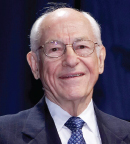
Robert A. Kyle, MD
The International Myeloma Foundation (IMF) shared news on the passing of Robert A. Kyle, MD, at age 98 on September 2, 2026. Dr. Kyle was a highly-revered expert in the field of myeloma research and known to many as the “Father of Myeloma” for his groundbreaking work in hematology. Dr. Kyle was Chairman of the first IMF Scientific Advisory Board and was also a long-time member of the IMF Board of Directors.
Dr. Kyle was Professor of Medicine, Laboratory Medicine, and Pathology at the Mayo Clinic College of Medicine in Rochester, Minnesota, where he also served as Chairman of the Division of Hematology.
Small Town Midwestern Roots
Robert A. Kyle was born to parents Arthur and Mabel Kyle on March 17, 1928, in Bottineau, North Dakota, a small town situated about 15 miles south of the Canadian border. In an interview with Dr. Kyle in 2019, The ASCO Post learned about Dr. Kyle’s extraordinary life and career. Excerpts of this interview are shared here.
“I went to a one-room country school. There were 15 to 20 children in the single room and 1 teacher,” said Dr. Kyle, adding, “Neither of my parents had much formal education, which they viewed as a liability they didn’t want my 4 brothers and me to suffer, so they strongly advised us to pursue higher education.”
After high school, he entered the North Dakota School of Forestry in Bottineau, which was a 2-year junior college. Dr. Kyle recalled that a family friend suggested he become a doctor. As he loved science, he kept the thought in the back of his mind.
Two Life-Changing Events
Dr. Kyle attended Northwestern University Medical School and graduated with distinction in June 1952. He then performed a rotating internship at Evanston Hospital in Illinois, a major teaching hospital affiliated with Northwestern.
“A couple of very impressive members of the faculty had trained at the Mayo Clinic [in Rochester], so I applied there and was accepted,” said Dr. Kyle. “The program required 6 months of laboratory work. One of the options was hematology, something I knew little about, so I signed up. My project involved acquired hemolytic anemia in chronic lymphocytic leukemia and lymphoma. I passed the written exam for my Master’s of Science in Medicine and then wrote a thesis.”
He continued, “Two things happened subsequently on the hematology hospital service that altered my future scientific life. First, I saw an electrophoretic pattern which I had never seen before and asked the consultant on the service what that meant. He didn’t know other than that a spike was often seen in multiple myeloma and Waldenström’s macroglobulinemia and suggested that I ‘look into it.’ Serum protein electrophoresis was a new test in clinical laboratories, but over 6,000 electrophoretic patterns had been performed at the Mayo Clinic. I looked at all of them and devised a formula based on height vs width of the spike. I discovered that if the height was greater than 4 to 1 over the width at the midpoint of the peak, patients usually had myeloma or macroglobulinemia; in contrast, if the ratio was lower than that, patients most likely had a chronic infection or an inflammatory process. So I wrote the paper, which was published in JAMA.”1
The other influential event came when a patient was admitted to the hematology service with a diagnosis of multiple myeloma. “A consulting dermatologist had performed a skin biopsy that disclosed amyloid. It struck me that some of the patients I had seen with smaller spikes on the electrophoretic patterns had systemic amyloidosis. I reviewed all 81 cases of primary amyloidosis seen at the Mayo Clinic from 1935 to 1959, and published a paper.2 I made the point that all these patients had abnormal plasma cells in the bone marrow and that some of them had frank multiple myeloma. Those two events changed my scientific career.”
More Training in Boston
Dr. Kyle traveled to Tufts University in Boston for a fellowship under William Dameshek, MD, one of the leading clinical hematologists in the nation. “After a few months, Dr. Dameshek invited me to work occasional afternoons in his private office. I saw patients and learned to write a letter to the referring physician that same day. It was a good habit to develop. Unfortunately, I learned that there were more patient records in Dr. Dameshek’s ‘Deceased’ filing cabinet than in the ‘Living’ filing cabinet. That reflects what happened to most hematology patients at that time,” said Dr. Kyle.
Dr. Kyle recalled a memorable event during his fellowship at Tufts. “Dr. Dameshek sent a couple of fellows to the Mary Imogene Bassett Hospital in Cooperstown, New York to learn bone marrow transplantation from E. Donnall Thomas, MD. When I returned to the Mayo Clinic, I saw a 7-year-old girl with severe aplastic anemia. She had an identical twin sister who, of course, was the perfect donor for a transplant. We performed the transplant, and the recipient lived.”
Dr. Kyle returned to the Mayo Clinic in Rochester, Minnesota, in August 1961 and he remained there throughout his decades-long career.
Advice for the Next Generation
Dr. Kyle spoke about the challenges and rewards of medicine, and he remarked that “The most important advice I have for young physicians is that they choose a specialty they are intensely interested in. Passion makes hard work and long hours less onerous. Also, today’s oncologists are pressed to see so many patients that one runs the risk of losing sight of the patient sitting in the exam room. You must be certain to take the time and effort to get to know your patient with cancer on a personal level.”
Among Dr. Kyle’s many honors are the David A. Karnofsky Memorial Award from ASCO and the Wallace H. Coulter Award from the American Society of Hematology. They are the highest honors bestowed by these two groups, and he is one of only two persons to receive both awards. (Kanti Rai, MD, was the second individual to receive both prestigious awards.)
The IMF established the Dr. Robert A. Kyle Lifetime Achievement Award in 2003, with Dr. Kyle as its first recipient.
Dr. Kyle is survived by his wife of 72 years, Charlene; his children, John Kyle (Emma Tilston), Mary Fredrickson (Jim), Barbara Kyle (Leffert George Tigelaar), and Juanita Kyle; nieces and nephews, 5 grandchildren; 9 great-grandchildren; and his brothers, Donald Kyle (Judy) and David Kyle (Linda).
References
1. Kyle RA, Bayrd ED, et al: JAMA 174:245-251, 1960.
2. Kyle RA, Bayrd ED: Arch Intern Med 107:344-353, 1961.
