
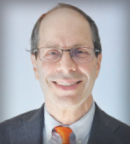
Eric J. Small, MD, FASCO
Growing up as an American in Mexico City, I couldn’t have grasped how that upbringing would eventually shape my professional identity. While a career in oncology was far from my mind then, that cross-cultural foundation deeply influenced my approach to medicine and my leadership as ASCO’s 62nd President.
I understood at an early age the power shift that happens when a foreign language is translated into a native one. The field is leveled. Agency is shared. Connections are born. When oncologists use the term “translation,” we generally think of science moving from the lab to the clinic to the community. However, in a broader sense, translating across languages, cultures, geography, and practice settings is equally important if our work is to have impact.
It’s this expression of translation that we share, even if we’ve never thought of it that way before. It’s why I chose my presidential theme to be “The Science and Practice of Translation: Improving Cancer Outcomes Worldwide.” Discovery science underpins the major advances in cancer care that inform what we do in the clinic, and that flow from the clinic into the communities we serve. Learning must move across borders, languages, and practice settings, so progress can reach every cancer, every patient, everywhere.
Translation in Practice
In our current environment, it’s evident to those of us involved in cancer research, care, and education that science matters. However, we must bring the science that happens in the lab to life for our patients. Just as we remind ourselves, it is crucial that we remind our patients, their families, and loved ones that the remarkable progress in cancer care available to us is only possible because of scientific discovery. Lives literally depend on sustainable, long-term funding of scientific research, and our patients and their communities can help us carry this message forward.
This past year has given me a front-row seat to your commitment. You’ve worked relentlessly to advance extraordinary science into real-world treatments. You’ve tied new data to prevention and early detection. You’ve connected science to the questions that patients ask every day. You’ve tailored research advances to the realities of care in resource-constrained environments everywhere. We must drive this momentum forward with continued urgency.
For ASCO, our Regional Councils are central to these efforts, serving as a vital global link for a two-way exchange of knowledge. They tailor specific programs to fit local needs, while sharing their own clinical expertise back with us to improve our efforts in the United States and around the world. These councils are doing incredible work addressing local challenges and supporting the development of the next generation of oncology professionals in Asia-Pacific, Latin America, Central and Eastern Europe, and sub-Saharan Africa.
Translation on Display
As we gather in Chicago for the 2026 ASCO Annual Meeting, we will take stock of how discovery continues to accelerate, even as gaps in access persist. This event reconnects us to our purpose. It reminds us that progress is measured not only by breakthroughs but by how widely those breakthroughs reach the people who need them.
We will take a comprehensive look at the research driving our field forward, hearing updates in lung, breast, gastrointestinal, and genitourinary cancers, as well as with hematologic malignancies, rare tumors, and others. It’s an incredible moment in our field, and I am excited for us to come together to explore the potential of practice-changing research to improve the lives of patients around the world. Our educational sessions will highlight how we translate these advances into practice in resource-constrained environments, including zones of conflict and in immigrant and displaced populations. As we remember that resource-constrained environments exist in every country and every county, including in the United States, we have much to learn from each other.
I also look forward to discussions with colleagues from across disciplines and practice settings during joint sessions with the American Association for Cancer Research (AACR), the American Society of Preventive Oncology (ASPO), and the European Cancer Organisation (ECO). These engagements bring our distinct strengths to important topics, such as drugging seemingly undruggable targets (https://meetings.asco.org/meetings/2026-asco-annual-meeting/335/17067), the rise in early-onset cancers (https://meetings.asco.org/meetings/2026-asco-annual-meeting/335/17050) and the changing global landscape of screening and early detection (https://meetings.asco.org/meetings/2026-asco-annual-meeting/335/17068). These sessions are a testament to the power of collaboration and an invitation to think together about how we move evidence into practice.
This commitment to practical impact anchors the ASCO 2026 Education Program, which is designed to bridge the gap between discovery and delivery, translating new insights into better care for patients everywhere. Sessions will examine a broad array of topics, for example:
- Delivering Outcomes That Matter (https://meetings.asco.org/meetings/2026-asco-annual-meeting/335/17190), an initiative developed by our colleagues in Common Sense Oncology (CSO);
- Understanding how artificial intelligence and digital tools might be scaled responsibly in low- and middle‑income countries and counties (https://meetings.asco.org/meetings/2026-asco-annual-meeting/335/16998); and
- Realizing the impacts of the environmental contributors to cancer risk (https://meetings.asco.org/meetings/2026-asco-annual-meeting/335/17192).
I am also proud to announce that our highly successful “Highlights of the Day” sessions have evolved into “Highlights of the Year.” Rather than a simple prior-day recap, these sessions will provide more robust context by complementing the Annual Meeting with science from meetings and publications from the entire year. We will address issues such as what these advances mean in clinical practice, where the knowledge gaps lie, and how application of this knowledge might vary in resource-constrained environments. These and many other discussions will underscore that translation involves far more than the scientific pipeline. It’s a cycle that begins long before diagnosis and continues well after new therapies arrive.
This year, we will widen the circle of participation and understanding by introducing live translation in six languages during the Opening and Plenary sessions and add individuals speaking in their native languages to the wonderful ASCO Voices session. Our Opening session will feature keynote speakers who are leaders in global health policy and economics and who will explore forces shaping cancer care worldwide, as well as a grief and loss expert who will offer reflections to ground us in the human experiences we bear witness to daily.
Translation Moving Forward
As we move forward, my hope is that we will continue to listen closely, ask generous questions, and imagine the routes by which promising science can travel to our patients. I hope we are equally attentive to prevention and early detection, and to what patients themselves say counts as better care. And I hope we keep widening the circle, across language, cultures, geographies, and practice settings, so our shared knowledge can do what it is meant to do.
The promise of science is not realized in the laboratory or in the clinic alone. It is realized when knowledge is shared, adapted, and made accessible. This represents ASCO at its best: a movement fueled by our commitment to ensure that progress reaches every cancer, every patient, everywhere.
DISCLOSURE: Dr. Small owns stock in Fortis and Teon Therapeutics.
Dr. Small is the 2025-2026 President of ASCO, and Co-Leader of the University of California, San Francisco (UCSF) Prostate Cancer Program and Deputy Director and Chief Scientific Officer at the UCSF Helen Diller Family Comprehensive Cancer Center.
Disclaimer: This commentary represents the views of the author and may not necessarily reflect the views of ASCO or The ASCO Post.
