
ASCO has issued a new clinical practice guideline on the use of systemic therapy for treatment of different types of thyroid cancer, a field that has changed substantially in recent years.1
“Despite a rather rapidly evolving field of targeted and nontargeted systemic agents in the management of thyroid malignancies, no detailed guidance as to the use of these agents was previously available for oncologists within and outside the United States,” said Nabil F. Saba, MD, of Emory University, who co-chaired the Expert Panel that produced the new guideline.
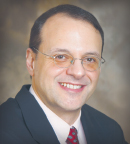
Nabil F. Saba, MD

Beth M. Beadle, MD
Beth M. Beadle, MD, of Stanford University, was the other co-chair, and she added that many new agents have recently been integrated into the thyroid cancer treatment landscape. “Thyroid cancer itself is a very diverse group of malignancies, and increased availability of molecular testing and targeted treatments based on these tests has really improved options for patients,” she said.
Dr. Saba added that the heterogeneity observed in thyroid disease types also exists among the new agents used to treat such malignancies. “What may apply to one agent does not apply to others in terms of priority of use, toxicities, and the appropriate sequencing in specific clinical scenarios,” he said. “This guideline provides a pathway for clinicians as to the appropriate use and sequencing of these very heterogeneous systemic therapy options.”
Literature Review and Varied Evidence Bases
The Expert Panel addressed a series of clinical questions for each of the thyroid cancer subtypes (well-differentiated thyroid carcinoma, differentiated high-grade thyroid carcinoma, and poorly differentiated thyroid carcinoma; anaplastic disease; and medullary disease). A literature search identified a total of 1,146 articles between 2000 and 2025, from which 66 studies were included in the final review.
“I think the take-home messages are to really work to establish the details of the diagnosis, treatment course, and molecular tests at the onset of treatment,” Dr. Beadle said. “The differences in optimal management can really be impactful for outcomes of patients.”
Both co-chairs noted that the evidence base is more limited in some thyroid cancer subtypes than others. Of the 66 studies included in the review, 16 were in well-differentiated disease, 25 in anaplastic disease, and 22 in medullary thyroid cancer, whereas only three covered differentiated high-grade or poorly differentiated thyroid carcinoma. The guideline’s recommendations in the latter setting are based largely on subgroup analyses from studies focused on well-differentiated or anaplastic cancers.
“The guideline is important because it puts together all of this information and identifies where we have strong data, where we have no/little data, and how to proceed when in a data-free (or limited data) zone,” Dr. Beadle said. “Of course, we wish to make recommendations based on the highest quality data, but we also want to use the lessons learned from all trials to try to inform the treatment of patients with rare cancers, in which large trials are not feasible.”
Recent Treatment Paradigm Changes
The co-chairs highlighted a few areas in which recent results signal important changes to treatment paradigms.
“Diseases such as anaplastic thyroid cancer that have a grim prognosis have recently witnessed improvements in outcome as a result of more effective systemic therapy approaches, and [this] is one example of why this guideline is very valuable for any practitioner treating patients with these types of cancers,” Dr. Saba said.
The new guideline recommends a swift work-up for anaplastic thyroid cancer, including determination of BRAFV600E status as well as stage and resectability. Mutation status should guide treatment with neoadjuvant therapy in some settings and with BRAF-directed systemic therapy in the advanced setting. For some patients with recurrent or metastatic differentiated high-grade or poorly differentiated thyroid carcinoma after primary treatment with surgery with or without radioactive iodine therapy, agents such as lenvatinib, sorafenib, or PD-1 or PD-L1 inhibitors may be most appropriate depending on various factors.
“The broad message is that this is an evolving field and staying updated as to new recommendations in management is important from a systemic therapy standpoint but also from a multidisciplinary angle,” Dr. Saba said.
Open Questions for the Future
Although research into thyroid cancer management has advanced considerably in recent years, the co-chairs noted that important questions and areas of interest remain for future studies and potential updates to the guideline.
Among those areas of interest, Dr. Saba said, would likely be the incorporation of novel systemic agents into the overall management of advanced disease as well as earlier-stage disease. “In addition, the appropriate sequencing and possible combinations of these agents with other systemic therapies such as immunotherapy and others is becoming a topic of major interest in some thyroid cancers and will deserve a deeper examination,” he said.
Dr. Beadle stressed that the inclusion of patients with rare cancers in clinical trials will be important to better tailor potential treatments in the future. “I also think that highlighting that multidisciplinary discussion is crucial,” she said. “While the guideline focuses on systemic therapy, the inclusion of surgery, radiation therapy, and nuclear medicine is necessary for optimal therapy for these patients. These patients require multidisciplinary care, and engaging the team members early ensures optimal integration of systemic therapy in the setting of other treatments.”
REFERENCE
1. Saba NF, Ismaila N, Adkins D, et al: Systemic treatment of thyroid cancer: ASCO Guideline. J Clin Oncol. Published online April 1, 2026.
Originally published in ASCO Daily News. © American Society of Clinical Oncology. ASCO Daily News, April 1, 2026. All rights reserved.
