
Raised in Lahaina, Hawaii, before wildfires destroyed much of the small tourist town in 2023, Travis Zack, MD, PhD, took an atypical path into medicine. His journey has been shaped by family, mentors, a personal experience with cancer, and a growing interest in how artificial intelligence (AI) can help clinicians navigate an increasingly complex medical knowledge landscape.
Travis Zack, MD, PhD
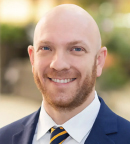
On family legacy: My parents valued education deeply and that importance was instilled in me early on.
On mentors: One undergraduate mentor suggested I consider biophysics instead of straight physics. That advice changed my trajecctory.
On a career in research and clinic: I began working in computational genomics at the Broad Institute and found myself surrounded by MD-PhDs and physisicans who were not only conducting meaningful research, but also caring for patients and improving lives directly. That’s when I realized I wanted to do both.
On the role of AI in health care: The standard cannot simply be fluency or convenience—it must be transparency and verifiability.
Dr. Zack is Assistant Adjunct Professor at UCSF and Chief Medical Officer of OpenEvidence, a medical information platform/AI tool widely used by health-care professionals in the United States. His work has focused on computational biology, oncology, machine learning, and clinical decision support.
In this installment of The ASCO Post’s Living a Full Life series, Guest Editor Jame Abraham, MD, FACP, spoke with Dr. Zack about his upbringing in Hawaii, the mentors who shaped his career, his transition from academic oncology to health AI, and how he envisions generative AI changing medical education and oncology practice. Here are excerpts from their conversation, edited for length and clarity.
Tracing the Early Beginnings
Jame Abraham, MD, FACP: Let’s start with your story. You were born in Hawaii. Tell us about your upbringing and how that shaped your path into medicine.
Travis Zack, MD, PhD: I was born in Lahaina, a small town on the northwest coast of Maui. My mother was a preschool teacher and both of my parents also worked in the community. My parents were not in academia, but they valued education deeply, and that importance was instilled in me early on.
When I went to college, I was not sure what I wanted to do. I entered UC Berkeley as a psychology major, then shifted to philosophy, and eventually landed in physics. It was the hardest subject I had studied, but it sparked my interest in research and in understanding first principles—breaking down complex problems, challenging assumptions, and identifying more efficient approaches to health system and other systemic challenges.
Guest Editor
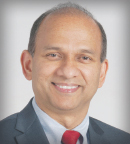
Jame Abraham, MD, FACP
Dr. Abraham is Chairman of the Department of Hematology and Medical Oncology at Cleveland Clinic and Professor of Medicine at Lerner College of Medicine.
One undergraduate mentor looked at my background and suggested I consider biophysics instead of straight physics. That advice changed my trajectory. That mentor was John Clarke, PhD, ScD, who in 2025 was awarded the Nobel Prize in Physics, jointly with Michel H. Devoret, PhD, and John M. Martinis, PhD, for their work revealing quantum physics in action.
I was initially interested in imaging at the single-molecule or even single-atom level. Coming from a small town without major hospitals or research centers, I had no real concept that physicians could also spend much of their careers conducting research. I thought doctors were simply the people you saw when you were sick or injured. At first, I viewed research and medicine as entirely separate paths.
Discovering Oncology
Dr. Abraham: What changed that trajectory?
Dr. Zack: During graduate school in biophysics, my mother developed breast cancer. At the time, I was doing imaging research that felt somewhat abstract, and I began asking myself what problem I was actually solving and what impact my work might have.
That experience pushed me to pursue rotations in cancer research. I began working in computational genomics at the Broad Institute and found myself surrounded by MD-PhDs and physicians who were not only conducting meaningful research, but also caring for patients and improving lives directly. That was when I realized I wanted to do both. After completing my PhD in Biophysics from Harvard, I attended medical school through the Health Sciences and Technology program at MIT and Harvard Medical School. I performed my residency at the UCSF, and completed my fellowship in oncology at UCSF Helen Diller Family Comprehensive Cancer Center.
A Family Experience With Cancer
Dr. Abraham: Your mother’s cancer diagnosis seems to have had a profound effect on you.
Dr. Zack: It did. My mother is doing well, but her experience with cancer was deeply meaningful in shaping my path. We later learned that we are a BRCA2 family, a realization that came only after her second diagnosis of breast cancer. Her father had died very young from what was believed to be a gastrointestinal malignancy, although the exact diagnosis was never confirmed. I believe he was a BRCA2 carrier, and I have many family members with BRCA2 mutations.
For me, being part of oncology has been meaningful on both the research and clinical sides. It is not only an intellectual pursuit; it is also deeply personal.
Mentors Along the Way
Dr. Abraham: Who were some of the other mentors who helped shape your journey?
Dr. Zack: There were many. In graduate school, I had mentors who recognized my quantitative strengths but also understood that I needed a stronger foundation in biology to do meaningful translational work.
Several mentors were especially influential. During medical school, I worked with Eliezer Van Allen, MD, at Dana-Farber, who gave me my first exposure to machine learning.
Further, in medical school, and, later, at UCSF, I had the good fortune to work with Atul Butte, MD, PhD, who fostered my interest in machine learning, real-world data, and the broader idea that research tools and products can be developed to meaningfully improve patient care. Atul was a pediatric endocrinologist and, importantly, he was a pioneer in machine learning. Sadly, Atul passed away in June 2025 following a 2-year cancer illness. He was just 55 years old; but his legacy will be everlasting. He championed the use of big data in science and health care and inspired a generation of trainees at UCSF. Those relationships were tremendously important.
From Academic Oncology to OpenEvidence
Dr. Abraham: You had been on a traditional academic path. Tell us about OpenEvidence and what led you to move into the company full-time.
Dr. Zack: For a long time, I imagined myself becoming a tenured professor. I had a faculty appointment at UCSF and was very excited about that path. But while collaborating with OpenEvidence, I saw that the company was not just publishing papers or conducting technical work—it was actively changing how medicine is practiced. That was incredibly compelling. To date, we have supported more than 100 million AI-powered clinical consultations from U.S. physicians and other clinicians at the point of care.
I was also able to continue doing things that matter deeply to me, including mentoring and thinking carefully about research and product quality. The difference is that instead of spending significant time writing grants, I now spend more time engaging with health systems, societies, and publishers. I am still building, still mentoring, and still working to improve patient care—but through a different mechanism and at a different scale.
How Generative AI Is Being Used in Medicine
Dr. Abraham: What do you think about generative AI and how it is transforming health care today?
Dr. Zack: One of the biggest roles for generative AI in medicine today is helping clinicians find relevant information within enormous volumes of data—whether that is the medical literature or the electronic medical record.
These are tasks humans are not naturally well suited to perform at scale. A community oncologist who treats multiple cancer types cannot realistically retain everything that has been published across those diseases, especially as the literature continues to expand rapidly. Similarly, patient charts are becoming longer and more fragmented, making it increasingly difficult to identify the key information needed before seeing a patient.
Generative AI helps address these challenges through retrieval and synthesis. That does not mean the tools are infallible—but neither are humans. In many ways, AI is being applied to a long-standing challenge in medicine: we are working in a field that contains more knowledge than any individual can quickly access in clinical practice.
What OpenEvidence Was Built to Do
Dr. Abraham: Tell us more specifically about OpenEvidence and why you are excited about it.
Dr. Zack: OpenEvidence is a medical information AI platform built to address the challenge of precision medical information retrieval. Across tens of millions of publications and thousands of new papers each week, how can an AI tool identify the right information when a clinician asks a question?
For us, it is not enough to generate an answer—the answer must be grounded in the appropriate references within a trust-but-verify framework. That means identifying the right sources first and then generating answers based on those sources. We also believe strongly that if you do not support and attribute the individuals and organizations creating medical knowledge, the entire system of evidence-based medicine begins to break down.
That is why licensing and attribution are so important. The goal is for clinicians to ask a question and receive a useful, evidence-based answer—with appropriate references—quickly. Increasingly, this also includes displaying original figures, pathways, and guideline flowcharts directly within responses so clinicians can see exactly what supports the recommendation.
Trust, Verification, and Clinical Use
Dr. Abraham: Trust is foundational in medicine. How do you think about trust in AI?
Dr. Zack: Trust is everything. In medicine, people make consequential decisions based on the information they receive. The standard cannot simply be fluency or convenience—it must be transparency and verifiability.
That is why it is critical not only to provide citations, but also to make the evidentiary basis visible whenever possible. If a system uses a guideline, figure, or clinical pathway, clinicians should be able to review that source directly and understand how the answer was derived.
Medical Education in the AI Era
Dr. Abraham: Many trainees are asking whether AI tools will make memorization less important or even make physicians less relevant. What is your response?
Dr. Zack: I do think the role of memorization is changing. Physicians will increasingly not need to function as encyclopedias for every therapy choice in every line of treatment, particularly as that information evolves rapidly.
What becomes more important is clinical reasoning and a strong foundation in pathophysiology. Even as therapies and adverse-effect profiles change, the underlying biology remains essential for understanding what is happening with a patient and why one decision may be more appropriate than another.
In that sense, these tools make the human elements of medicine more important. Physicians still need to interpret evidence in the context of the individual patient. AI cannot learn that from randomized trials alone. Judgment, context, and human understanding will continue to be essential.
Looking Ahead for Oncology Practice
Dr. Abraham: Looking ahead 5 to 10 years, how do you envision AI reshaping oncology?
Dr. Zack: It is already clear how difficult it is for community oncologists to keep up with the growing volume of specialty recommendations across disease types. Even at large centers, this is challenging; in community practice, it can be even more so.
What excites me is the possibility that oncologists will no longer need to spend significant time searching through large documents or reconstructing unfamiliar disease states before seeing each patient. Instead, they can rely on AI tools that surface the most relevant evidence quickly, while still applying their clinical knowledge and judgment.

I also believe AI will help advance precision therapy in a way that supports clinicians rather than replaces them. The opportunity is to reduce friction and cognitive burden so physicians can focus more on the patient and less on information retrieval.
Words of Advice for the Oncology Community
Dr. Abraham: What final thoughts would you offer to the broader oncology community as this AI revolution continues?
Dr. Zack: A degree of AI literacy will be important for physicians, whether or not they use these tools directly. Patients are already using AI—this is, in many ways, the next chapter after “Dr. Google.” Oncologists will need to help patients interpret what they encounter and understand what is reliable.
More broadly, clinicians should approach AI with neither blind trust nor blanket skepticism. The appropriate approach is thoughtful engagement—understanding what these systems do well, where they fall short, and how they can support high-quality care.
Used responsibly, they can help reduce the burden of information overload while preserving what matters most in oncology: physician judgment, patient context, and the human relationship at the center of care.
Disclosure: Dr. Zack is Chief Medical Officer of OpenEvidence.
