
This year’s Sjöberg Prize of $1 million U.S. dollars was awarded to a British cancer researcher who has provided fundamental knowledge about evolution in tumors. Professor Charles Swanton, FRCP, BSc, PhD, at the Francis Crick Institute in London, described how tumors’ mutations arise and develop. His discoveries could help explain why treatments may not always be effective, as well as lead the way to more accurate diagnostics.
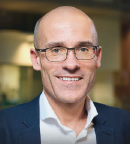
Charles Swanton, FRCP, BSc, PhD
Professor Swanton “started with a fairly simple experiment, where he divided a kidney tumor into pieces and analyzed each one. He saw that they were all different, and noted that there must have been a process that led to mutations that only exist in specific parts of the tumor,” said Professor Urban Lendahl, PhD, Secretary of the Sjöberg Prize Committee at the Royal Swedish Academy of Sciences.
This may explain why some treatments fail to completely eradicate a cancer. However, to investigate these connections in more depth, Professor Swanton needed to follow many patients over a long period of time. This was done as part of a major British research project, TRACERx, he initiated.
‘A Treasure Trove’
The genetic landscape of a tumor can be likened to a family tree. The mutations that occur early in development are in the tree’s trunk; these are lasting and are found in all the tumor’s cells. Over time, other mutations occur; these are in the tree’s branches. Cancer treatment usually only removes some of the branches, whereas others unfortunately survive. This means the entire tumor is not eradicated.
Professor Lendahl described Dr. Swanton’s discoveries as a treasure trove, which can be explored by other researchers who want to improve cancer treatment and diagnostics. He has also developed a blood test that can, at an early stage, identify cancer patients who are starting to relapse.
“I hope this prize money is going to allow us to really understand how that very first step in tumor initiation and evolution occurs. If we can understand that process, I hope we can intercept it and prevent it from happening and therefore prevent cancers from emerging,” he said.
Professor Charles Swanton, FRCP BSc PhD, is Deputy Clinical Director at the Francis Crick Institute and Chief Clinician at Cancer Research UK. He completed his PhD at the Imperial Cancer Research Fund Laboratories. He then joined the Royal Marsden Hospital as a consultant, became a professor of cancer medicine at UCL Hospitals, and a principal group leader at the Francis Crick Institute.
