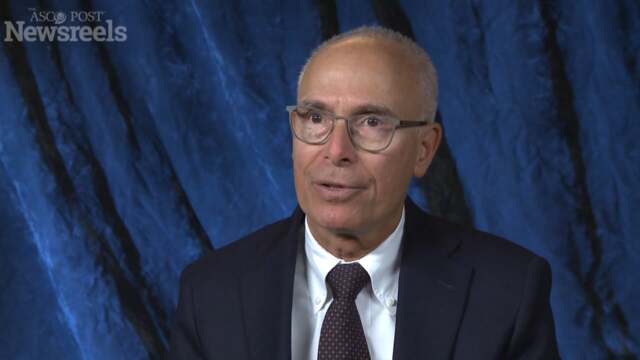
James F. Cleary, MD, on Global Access to Opioids
2016 Palliative Care in Oncology Symposium
James F. Cleary, MD, of the University of Wisconsin Carbone Cancer Center, talks about the many reasons that 80% of the world’s population lacks access to opioids, the mainstay of cancer pain management.
Eric Roeland, MD, of the University of California, San Diego, discusses the key papers presented at this year’s Palliative Care in Oncology Symposium.
Charles F. von Gunten, MD, PhD, of OhioHealth, discusses hospice care as a measure of quality, and findings that show medical oncologists doubled the median length of hospice service from 20 days to 40 days (Abstract 45).
Emily Haozous, PhD, RN, of the University of New Mexico, discusses health disparities and cultural differences in palliative and end-of-life care, with case study examples drawn from American Indian communities.
Areej El-Jawahri, MD, of Massachusetts General Hospital, discusses ways in which palliative care can reduce symptoms, improve quality of life, reduce depression and anxiety, and potentially optimize end-of-life care for patients with hematologic malignancies.
Stephen T. Sonis, DMD, DMSc, of Dana-Farber Cancer Institute, discusses the epidemiology, pathogenesis, and scope of oral complications of radiation therapy.