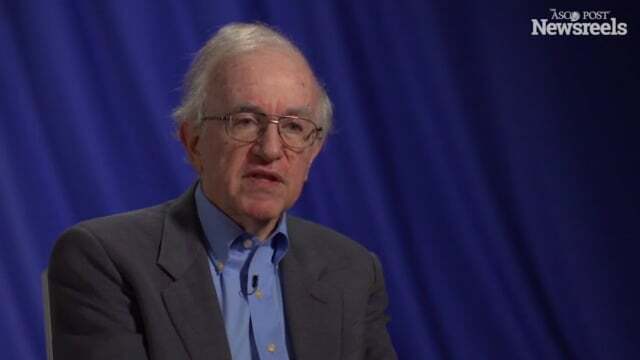
Charles L. Loprinzi, MD, on Olanzapine for Prevention of CINV
2015 Palliative Care in Oncology Symposium
Charles L. Loprinzi, MD, of the Mayo Clinic, discusses olanzapine for the prevention of chemotherapy-induced nausea and vomiting in patients receiving highly emetogenic chemotherapy (Abstract 176).
Ralph J. Hauke, MD
Ralph J. Hauke, MD, of Nebraska Cancer Specialists, discusses the application of scientific analysis and research to palliative care issues, which will allow better prognostication, implementation of measures, and improved quality of life.
Eduardo Bruera, MD
Eduardo Bruera, MD, of The University of Texas MD Anderson Cancer Center, discusses exciting developments in the assessment and management of cachexia, as well as a number of emerging pharmacologic and nonpharmacologic interventions (Abstract 67).
Vicki Jackson, MD, MPH
Vicki Jackson, MD, MPH, of Massachusetts General Hospital, summarizes her keynote lecture (plenary talk).
Judith Paice, PhD, RN
Judith Paice, PhD, RN, of Northwestern University, reviews the current principles on assessing and treating neuropathic pain in cancer.
Lawrence H. Einhorn, MD
Lawrence H. Einhorn, MD, of Indiana University Simon Cancer Center, discusses the encouraging study findings on olanzapine for prevention of chemotherapy-induced nausea and vomiting in patients receiving highly emetogenic chemotherapy (Abstract 176).