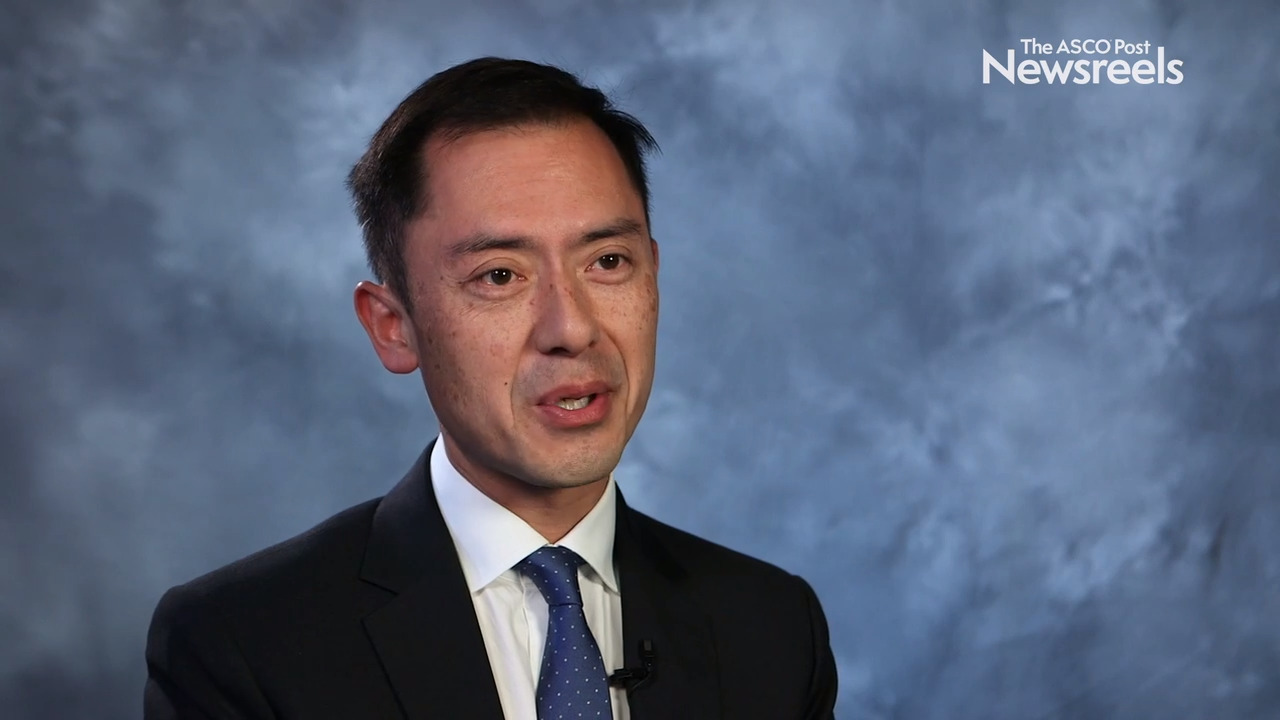
Catherine M. Diefenbach, MD, on Follicular Lymphoma: Polatuzumab Vedotin Plus Obinutuzumab/Lenalidomide
2019 ASH Annual Meeting & Exposition
Catherine M. Diefenbach, MD, of the Perlmutter Cancer Center at NYU Langone, discusses a primary analysis of a phase Ib/II trial showing that the novel triplet combination of polatuzumab vedotin plus obinutuzumab/lenalidomide is safe and effective, with high complete response rates seen in a heavily pretreated and refractory population (Abstract 126).
Ilaria Iacobucci, PhD, of St. Jude Children’s Research Hospital, discusses her work to more accurately define mutation subtypes in acute myeloid leukemia and myelodysplastic syndromes, as well as the implications for diagnosis, prognosis, and treatment (Abstract LBA-4 ).
Jennifer Crombie, MD, of Dana-Farber Cancer Institute, discusses early study results which showed that duvelisib plus venetoclax showed activity in patients with relapsed or refractory chronic lymphocytic leukemia/small lymphocytic lymphoma, with no dose-limiting toxicities observed (Abstract 1763).
Patrick A. Brown, MD, of Johns Hopkins University, discusses phase III findings from a Children’s Oncology Group Study showing that blinatumomab was superior to chemotherapy in terms of efficacy and tolerability for young patients as a post-reinduction therapy in the setting of high- and intermediate-risk first relapse of B-cell acute lymphoblastic leukemia (Abstract LBA-1).
Jeff P. Sharman, MD, of the Willamette Valley Cancer Institute and US Oncology Research, discusses phase III findings from the ELEVATE TN study, which showed that acalabrutinib plus obinutuzumab and acalabrutinib monotherapy improved progression-free survival in patients with treatment-naive chronic lymphocytic leukemia (Abstract 31).
Andrew H. Wei, MBBS, PhD, of The Alfred Hospital, Melbourne, discusses phase III findings on oral azacitidine (CC-486), the first treatment used in the maintenance setting shown to improve both overall and disease-free survival in patients with acute myeloid leukemia that is in remission following induction chemotherapy (Abstract LBA-3).