Jeff P. Sharman, MD, on CLL: Trial Results on Acalabrutinib, Obinutuzumab, and Chlorambucil
2019 ASH Annual Meeting & Exposition
Jeff P. Sharman, MD, of the Willamette Valley Cancer Institute and US Oncology Research, discusses phase III findings from the ELEVATE TN study, which showed that acalabrutinib plus obinutuzumab and acalabrutinib monotherapy improved progression-free survival in patients with treatment-naive chronic lymphocytic leukemia (Abstract 31).
Loretta J. Nastoupil, MD, of The University of Texas MD Anderson Cancer Center, discusses phase II study findings that showed obinutuzumab in combination with lenalidomide for patients with previously untreated, high tumor burden follicular lymphoma was associated with improved outcomes (Abstract 125).
Ilaria Iacobucci, PhD, of St. Jude Children’s Research Hospital, discusses her work to more accurately define mutation subtypes in acute myeloid leukemia and myelodysplastic syndromes, as well as the implications for diagnosis, prognosis, and treatment (Abstract LBA-4 ).
Edward A. Stadtmauer, MD, of the University of Pennsylvania Abramson Cancer Center, discusses phase I results of immune cells, modified with CRISPR/Cas9 technology, and infused in three patients (two with multiple myeloma and one with sarcoma). Researchers observed the cells expand and bind to their tumor targets with no serious side effects (Abstract 49).
Jerald P. Radich, MD, of the Fred Hutchinson Cancer Research Center, discusses a gene-expression model that distinguishes patients with chronic myeloid leukemia who achieved a deep molecular response from those with a poor response to treatment. This work could yield new therapeutic targets that could potentially turn a poor responder into a good responder who might even achieve treatment-free remission (Abstract 665).
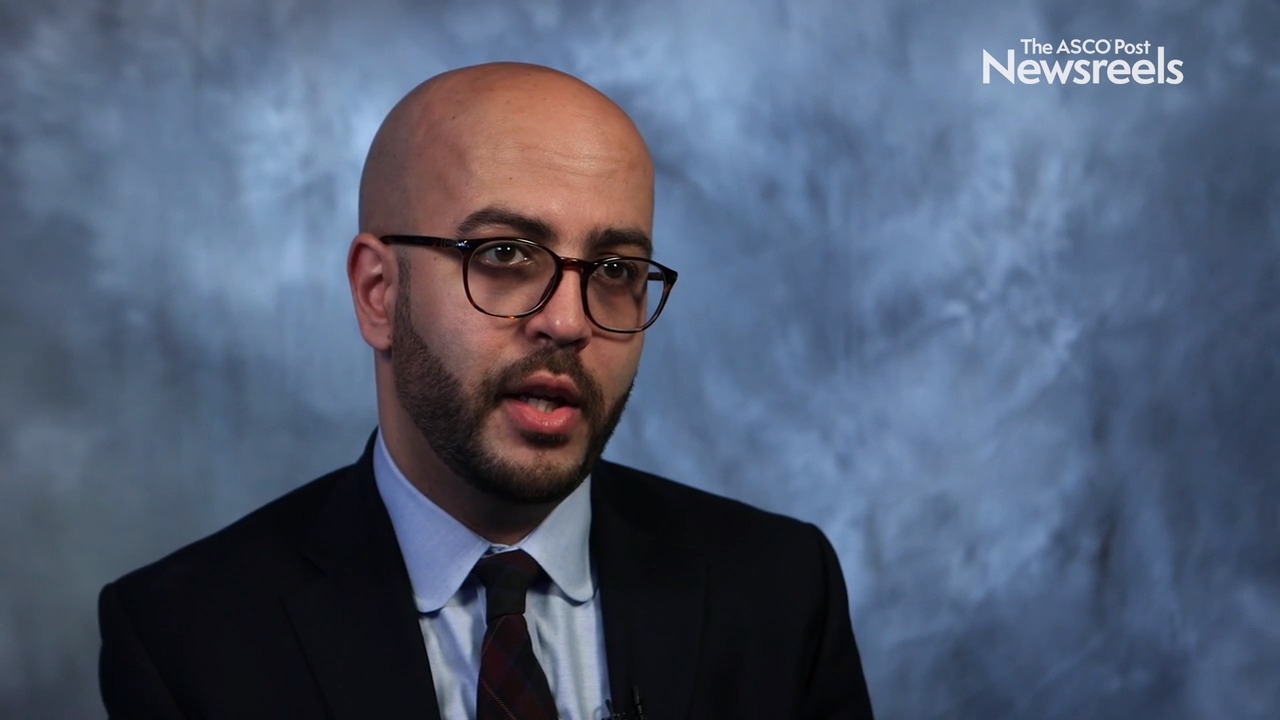
Mark Bustoros, MD, of Dana-Farber Cancer Institute, discusses phase II study results showing that the combination of ixazomib, lenalidomide, and dexamethasone is effective in patients with high-risk smoldering disease, with a high response rate, convenient schedule, and manageable toxicity. Longer follow-up for disease outcome is ongoing (Abstract 580).