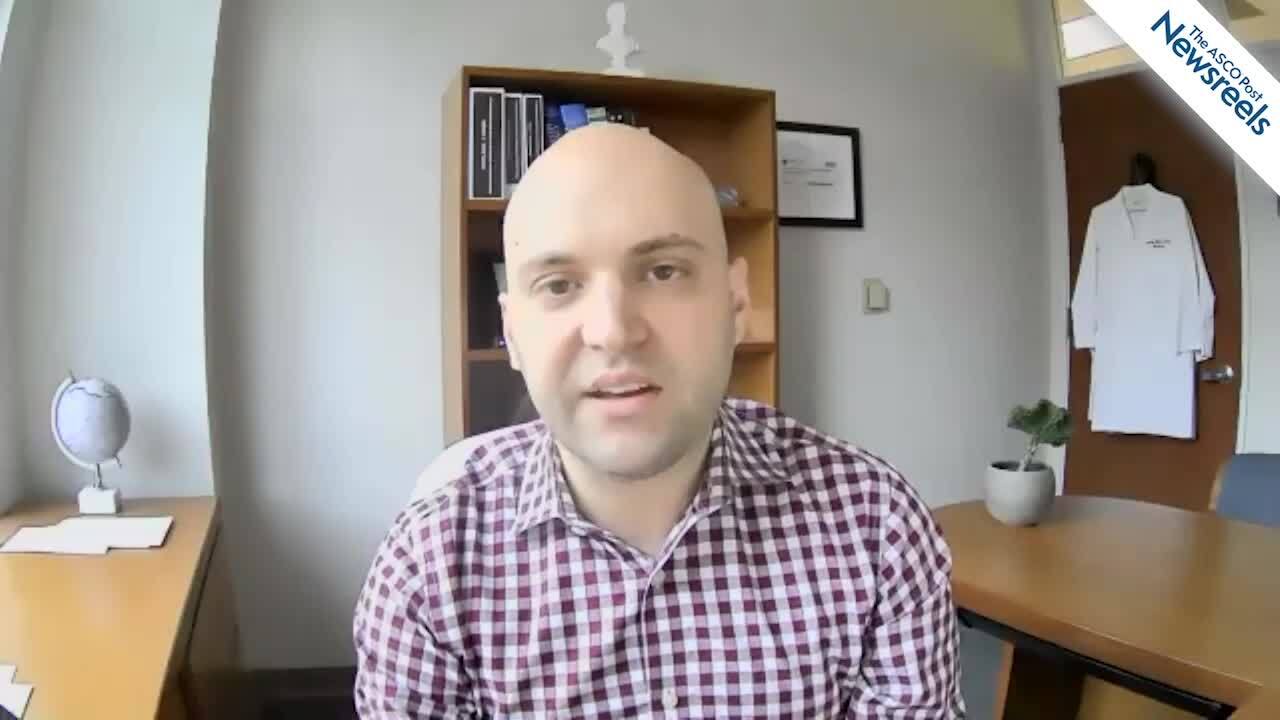
Peter H. O’Donnell, MD, on Urothelial Cancer: First-Line Pembrolizumab in Cisplatin-Ineligible Patients
2021 ASCO Annual Meeting
Peter H. O’Donnell, MD, of The University of Chicago, discusses response and survival results from the phase II KEYNOTE-052 study, which showed that after up to 5 years of follow-up, pembrolizumab continued to elicit clinically meaningful, durable antitumor activity in cisplatin-ineligible patients with advanced urothelial cancer (Abstract 4508).
The ASCO Post Staff
Thierry André, MD, of Hôpital Saint-Antoine, discusses final overall survival data for the phase III KEYNOTE-177 study, which confirmed pembrolizumab as a new standard of care for first-line treatment of patients with microsatellite instability–high/mismatch repair–deficient metastatic colorectal cancer (Abstract 3500).
The ASCO Post Staff
Priya Rastogi, MD, of the University of Pittsburgh, discusses results from the NRG Oncology/NSABP B-42 trial, which evaluated the utility of the 70-gene MammaPrint assay in predicting the benefit of extended letrozole therapy in patients who had completed 5 years of adjuvant endocrine therapy (Abstract 502).
The ASCO Post Staff
Nicholas J. Short, MD, of The University of Texas MD Anderson Cancer Center, discusses early results from a phase II study which showed that combining ponatinib and blinatumomab in patients with Philadelphia chromosome–positive acute lymphoblastic leukemia may prove to be an effective chemotherapy-free regimen that might reduce the need for allogeneic hematopoietic stem cell transplant (Abstract 7001).
The ASCO Post Staff
Neeraj Agarwal, MD, of Huntsman Cancer Institute at the University of Utah, discusses phase III data from the SWOG S1216 trial, which evaluated the clinical benefit of using androgen-deprivation therapy with either orteronel (or TAK-700, a CYP17 inhibitor) or bicalutamide in patients with newly diagnosed metastatic hormone-sensitive prostate cancer (Abstract 5001).
The ASCO Post Staff
Pasi A. Janne, MD, PhD, of Dana-Farber Cancer Institute, discusses study findings that show patritumab deruxtecan is effective in patients with EGFR-mutated and inhibitor-resistant non–small cell lung cancer. Dr. Janne also explains why targeting HER3, a mutation expressed in most EGFR-altered cancers, is a beneficial treatment approach (Abstract 9007).