Andrew D. Zelenetz, MD, PhD, on Mantle Cell Lymphoma: Immunochemotherapy Plus Lenalidomide
2020 ASH Annual Meeting & Exposition
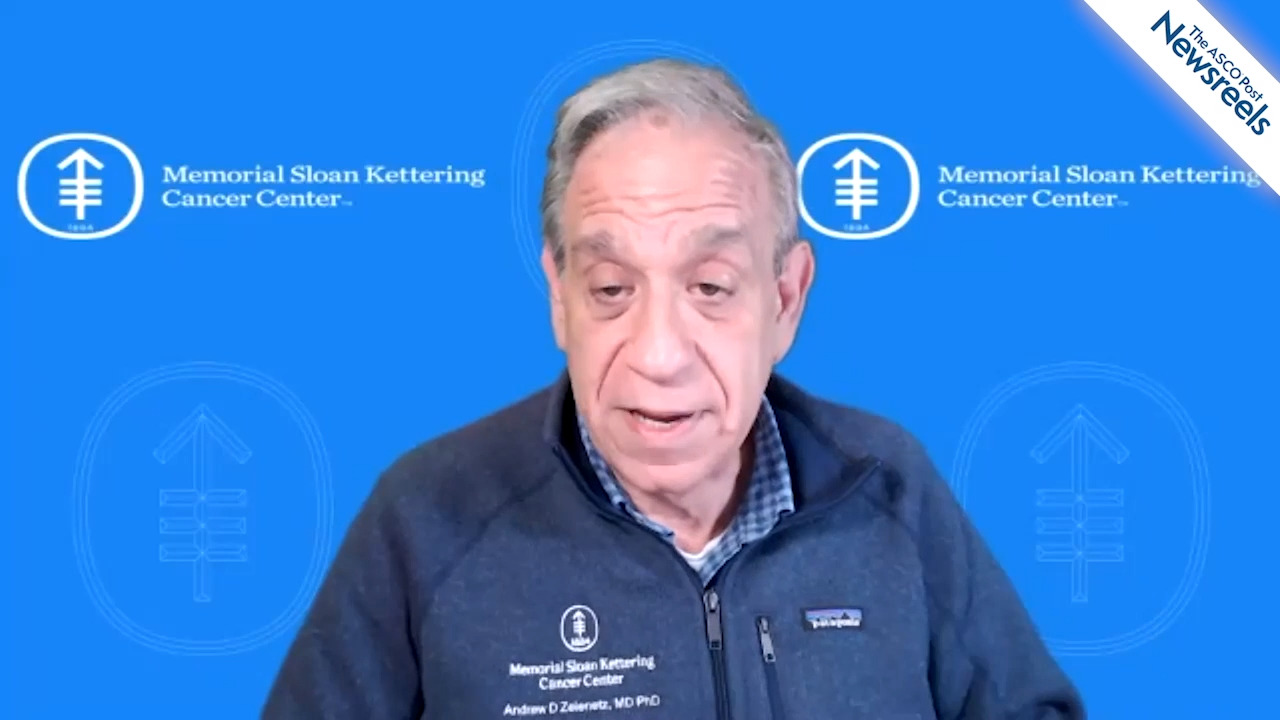
Andrew D. Zelenetz, MD, PhD, of Memorial Sloan Kettering Cancer Center, discusses phase II results from a single-center study that explored a novel approach for high-risk patients with mantle cell lymphoma. Among patients with TP53 wild-type disease, the data suggested this treatment was effective (Abstract 119).
The ASCO Post Staff
Matthew S. Davids, MD, of Dana-Farber Cancer Institute, summarizes three key studies from a session he co-moderated on ibrutinib plus venetoclax for first-line treatment of patients with chronic lymphocytic leukemia (CLL) and small lymphocytic lymphoma (SLL), long-term responses to these agents for relapsed and refractory CLL, and undetectable minimal residual disease following fixed-duration treatment with venetoclax and rituximab for CLL (Abstracts 123, 124, and 125).
The ASCO Post Staff
Steven M. Horwitz, MD, of Memorial Sloan Kettering Cancer Center, discusses phase II data from the Primo trial, which support continued evaluation of duvelisib as a treatment option for relapsed or refractory peripheral T-cell lymphoma due to consistent response rates (Abstract 44).
The ASCO Post Staff
Hassan Awada, MD, of the Taussig Cancer Institute, Cleveland Clinic Foundation, discusses the use of newer machine-learning techniques to help decipher a set of prognostic subgroups that could predict survival, thus potentially improving on traditional methods and moving acute myeloid leukemia into the era of personalized medicine (Abstract 34).
The ASCO Post Staff
Andrew D. Zelenetz, MD, PhD, of Memorial Sloan Kettering Cancer Center, offers his expert views on five treatment studies in mantle cell lymphoma focusing on the next-generation BTK inhibitor LOXO-305; lisocabtagene maraleucel; minimal residual disease monitoring following autologous stem cell transplantation with or without rituximab maintenance; the antibody-drug conjugate VLS-101; and venetoclax, lenalidomide, and rituximab (Abstracts 117, 118, 120, 121, 122).
The ASCO Post Staff
Curtis Lachowiez, MD, of The University of Texas MD Anderson Cancer Center, discusses an interim analysis of a phase Ib/II study showing that venetoclax plus chemotherapy represents an effective regimen, particularly in patients with newly diagnosed and relapsed or refractory acute myeloid leukemia. The regimen appears to be an effective bridge to hematopoietic stem cell transplantation (Abstract 332).