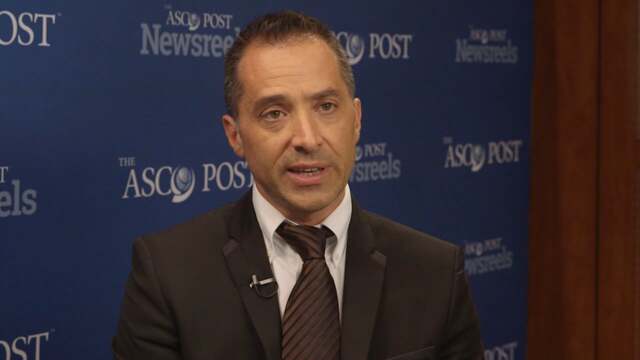
Hope S. Rugo, MD, on HER2+ Breast Cancer: Findings on a Trastuzumab Biosimilar
2016 ASCO Annual Meeting
Hope S. Rugo, MD, of the University of California, San Francisco, discusses phase III study results on a new possible alternative to trastuzumab for HER2-positive metastatic breast cancer: the biosimilar known as Myl-1401O (Abstract LBA503).
Ghassan K. Abou-Alfa, MD, of Memorial Sloan Kettering Cancer Center, discusses findings of this phase III study of sorafenib plus doxorubicin versus sorafenib in patients with advanced hepatocellular carcinoma (Abstract 4003).
Patricia J. Goldsmith, Chief Executive Officer of CancerCare, which provides free, professional support services to anyone affected by cancer, discusses findings from six distinct surveys with input from more than 3,000 individuals at varying stages of their cancer experience.
Arjun Vasant Balar, MD, of the Perlmutter Cancer Center at NYU Langone Medical Center, discusses findings on atezolizumab as first-line therapy in cisplatin-ineligible locally advanced/metastatic disease (Abstract LBA4500).
Helen MacKay, MD, of the Sunnybrook Odette Cancer Centre, discusses findings from this phase II study of intraperitoneal vs intravenous chemotherapy following neoadjuvant chemotherapy and optimal debulking surgery in patients with epithelial ovarian cancer (Abstract LBA5503).
Fabrice Denis, MD, PhD, of the Institut Inter-regional de Cancérologie Jean Bernard, discusses findings from a phase III trial on an app used between visits for early detection of symptomatic relapse and complications in high-risk lung cancer patients (Abstract LBA9006).
 To see the English language version of this discussion, click here.