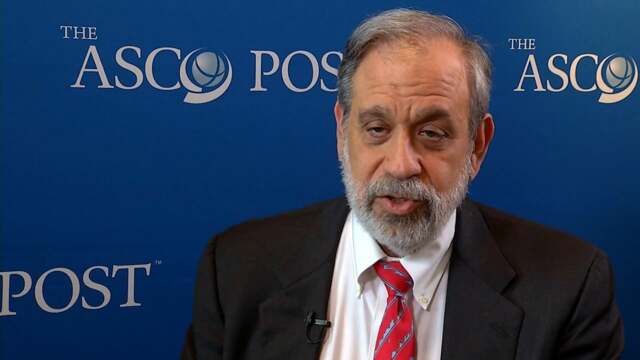
Eric Jonasch, MD, on Kidney Cancer: Current and Novel Treatment Options
2015 NCCN Annual Conference
Eric Jonasch, MD, of The University of Texas, MD Anderson Cancer Center, discusses the progress being made in kidney cancer treatment and the clinical trials that focused on sunitinib, sorafenib, and everolimus, among others.
Rebecca H. Johnson, MD
Although guidelines worldwide mandate fertility preservation for newly diagnosed patients within their reproductive window, most patients are still not referred or offered this option. Rebecca H. Johnson, MD, of Mary Bridge Children’s Hospital, explains the steps that need to be taken when counseling patients.
Crystal S. Denlinger, MD
Crystal S. Denlinger, MD, of Fox Chase Cancer Center, discusses cardiac toxicities in cancer survivors, a new topic for the NCCN Survivorship Guidelines this year, and the need for more research on this important side effect, including prevention and surveillance.
Samuel M. Silver, MD, PhD, and Al B. Benson III, MD, FACP, FASCO
Samuel M. Silver, MD, PhD, of the University of Michigan Comprehensive Cancer Center, and Al B. Benson III, MD, FACP, FASCO, of Robert H. Lurie Comprehensive Cancer Center of Northwestern University, discuss the evolution of NCCN Guidelines, which are available free online, and the components that make them effective: a multidisciplinary approach, the participation of patient advocates, consistency, and affordability of the evidence.
Robert W. Carlson, MD, and William J. Gradishar, MD
Robert W. Carlson, MD, Chief Executive Officer, National Comprehensive Cancer Network, and William J. Gradishar, MD, Robert H. Lurie Comprehensive Cancer Center of Northwestern University, discuss the evolution of the breast cancer guidelines, the inclusion of varied fields––such as plastic surgery, pathology, patient advocacy, and radiation–– and new treatment changes.
Andrew D. Zelenetz, MD, PhD
Andrew D. Zelenetz, MD, PhD, of Memorial Sloan Kettering Cancer Center, talks about the revolution in lymphoma treatment, which started with rituximab and continues with obinutuzumab, ibrutinib, and others.