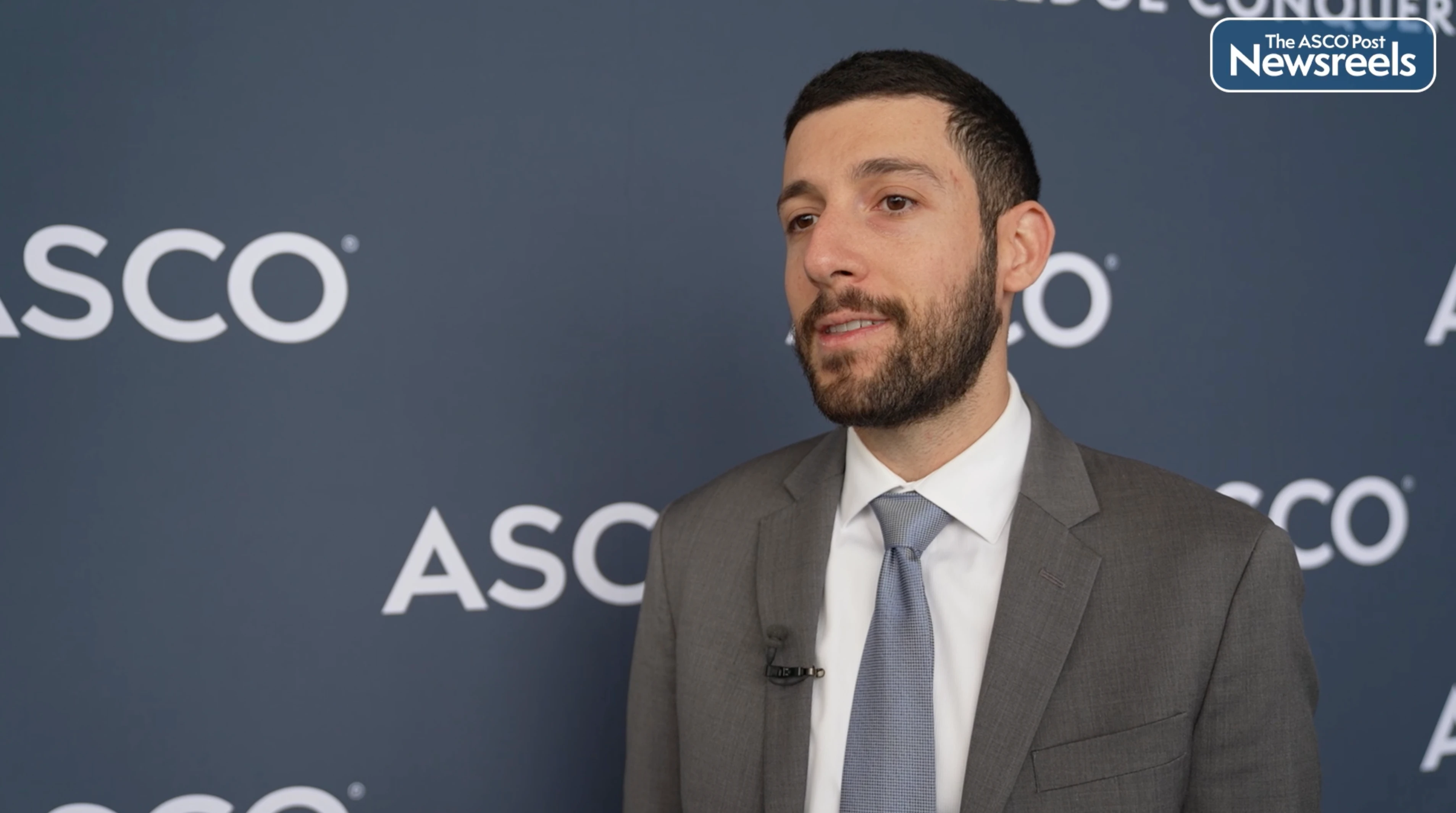
Mali Barbi, MD, MS, on Endometrial Cancer: Data in dMMR Disease and B7-H4 ADCs for Advanced Disease
ASCO 2026
Mali Barbi, MD, MS, of Northwell Health Cancer Institute Center for Women's Cancer, discusses durable survival benefits shown in the NRG-GY018 trial with pembrolizumab and the RUBY trial with dostarlimab for patients with mismatch repair–deficient (dMMR) endometrial cancer. In addition, B7-H4 antibody-drug conjugates such as puxitatug samrotecan are emerging as options for relapsed/metastatic disease.
The ASCO Post Staff
John V. Heymach, MD, PhD, of The University of Texas MD Anderson Cancer Center, discusses results from the primary analysis of the multinational phase III WU-KONG28 trial, which looked at sunvozertinib monotherapy vs platinum-based therapy as first-line treatment for patients with advanced non–small cell lung cancer (NSCLC) and EGFR exon 20 insertions (Abstract LBA8500).
The ASCO Post Staff
Peter Schmid, MD, PhD, FRCP, of Queen Mary University of London, shares more data from the phase III lidERA BC clinical trial. This analysis focused on the efficacy and safety of giredestrant in patients with estrogen receptor (ER)-positive, HER2-negative early breast cancer, looking at both premenopausal and postmenopausal populations (Abstract 502).
Jamie E. Chaft, MD, FASCO, of Memorial Sloan Kettering Cancer Center, discusses findings from ECOG-ACRIN EA5142/ALCHEMIST, a phase III randomized trial that evaluated the efficacy of adjuvant nivolumab after standard-of-care adjuvant therapy in patients with resected lung adenocarcinoma without sensitizing EGFR and ALK alterations and squamous cell carcinoma (Abstract 8000).
Dor Abelman, BS, of the University of Toronto, reviews results of a comparison of two minimally invasive measurable residual disease (MRD) assays—BM-informed cfDNA whole-genome sequencing (cfWGS) and plasma proteomic MRD (EasyM)—in patients with multiple myeloma (Abstract 7546).
The ASCO Post Staff
Ramez N. Eskander, MD, of UC San Diego Moores Cancer Center, presents an updated overall survival analysis and examination of subsequent therapy in patients with endometrial cancer treated with pembrolizumab plus carboplatin/paclitaxel as compared to carboplatin/paclitaxel plus placebo in the NRG-GY018 trial (Abstract 5502).