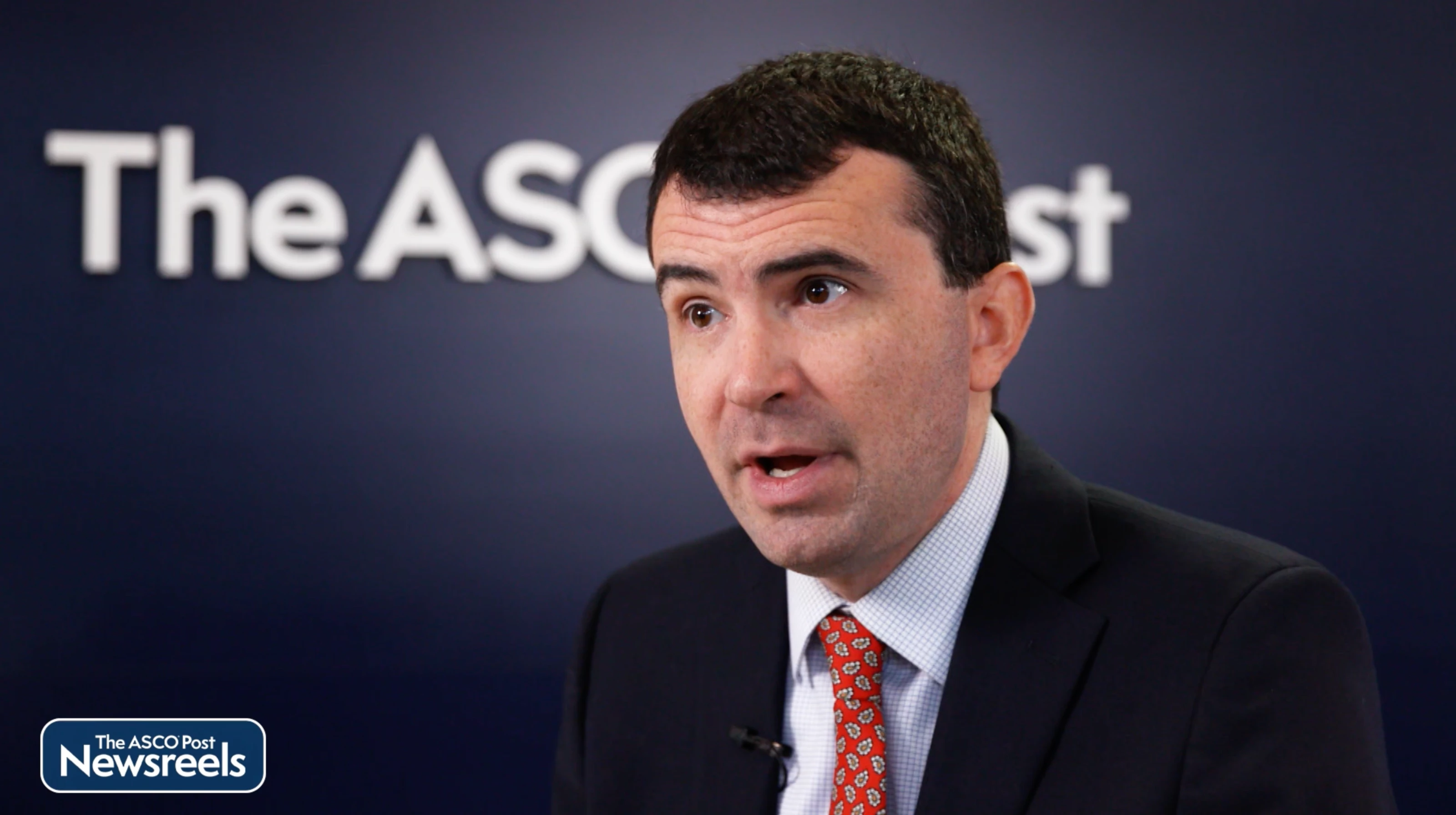
Luis G. Paz-Ares, MD, PhD, on Extensive-Stage SCLC: Comparison of First-Line Regimens
2025 ASCO Annual Meeting
Luis G. Paz-Ares, MD, PhD, of Hospital Universitario 12 de Octubre, H12O-CNIO Lung Cancer Unit, Universidad Complutense and Ciberonc, discusses data from the TIGOS trial, a phase III study comparing the first-line use of atigotatug (an antifucosyl-GM1 monoclonal antibody) plus nivolumab fixed-dose combination with chemotherapy vs atezolizumab with chemotherapy in patients with extensive-stage small cell lung cancer (SCLC) (Abstract TPS8127).
The ASCO Post Staff
Mazyar Shadman, MD, PhD, of Fred Hutchinson Cancer Center and the University of Washington, presents results from arm D of the SEQUOIA trial, which evaluated the combination of zanubrutinib and venetoclax in treatment-naive patients with chronic lymphocytic leukemia/small lymphocytic lymphoma (Abstract 7009).
The ASCO Post Staff
Constantine Si Lun Tam, MD, FRACP, FRCPA, MBBS, of Alfred Hospital and Monash University, reviews results from the 5-year follow-up of arm C of the SEQUOIA trial of treatment-naive patients with chronic lymphocytic leukemia/small lymphocytic lymphoma (Abstract 7011).
The ASCO Post Staff
Martin Reck, MD, PhD, of LungenClinic Grosshansdorf, Germany, discusses data from the phase III AEGEAN trial that studied perioperative durvalumab and neoadjuvant chemotherapy. Patients who were MRD-positive after surgery had significantly worse disease-free survival compared to MRD-negative patients. In addition, mutations in KEAP1 and KMT2C were associated with MRD positivity and reduced benefit from the regimen, identifying a small high-risk subgroup with poor prognosis (Abstract 8009).
The ASCO Post Staff
Bjorn Henning Gronberg, MD, PhD, of Norwegian University of Science and Technology (NTNU) and St. Olavs Hospital, presents phase II findings on the efficacy of atezolizumab after chemoradiotherapy (CRT) in limited-stage small cell lung cancer (SCLC) (LBA8005).
The ASCO Post Staff
Eric Huttenlocher Bent, MD, PhD, of Memorial Sloan Kettering Cancer Center, reviews results from the phase II Metacure trial (cohorts B2 and the B2 expansion), which looked at the efficacy of stereotactic body radiotherapy for PSMA-PET–detected oligometastatic prostate adenocarcinoma (Abstract 5014).