Karen Eubanks Jackson on Receiving the 2025 ASCO Patient Advocate Award
2025 ASCO Annual MeetingAdvertisement
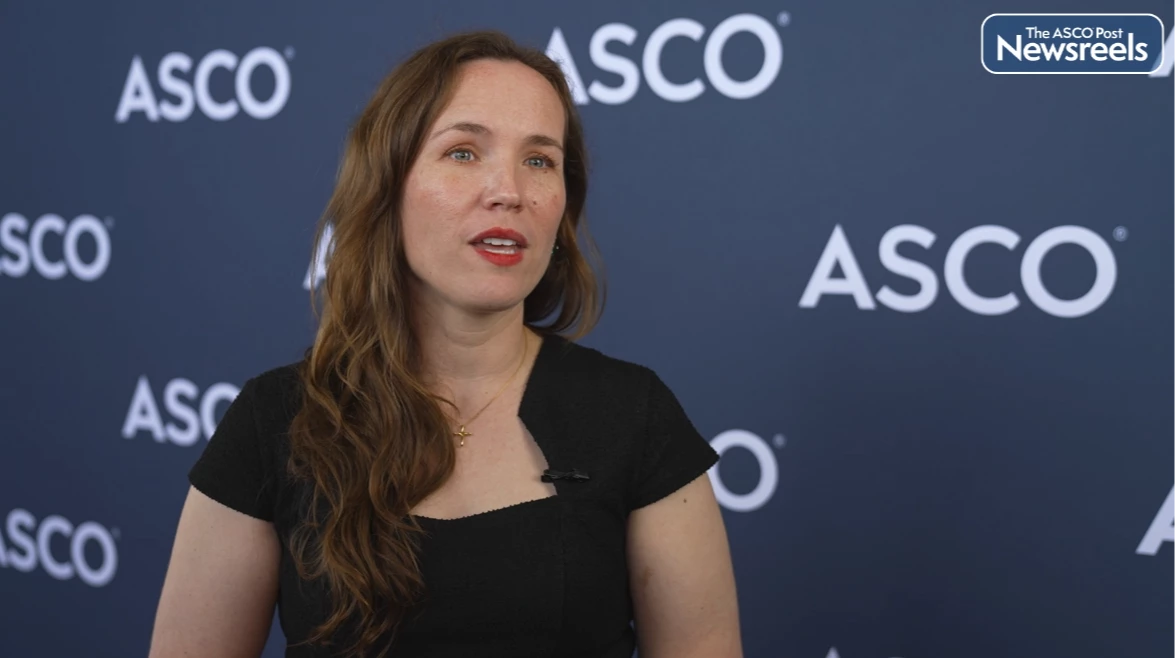
Karen Eubanks Jackson, Founder and Chief Executive Officer of Sisters Network Inc. and recipient of the 2025 ASCO Patient Advocate Award, discusses her 30-year-long effort to support patients with breast cancer in the Black community. Sisters Network is focused on raising awareness of early screening for breast cancer, providing financial assistance, and addressing the disparities Black women face in breast cancer care and outcomes.
Transcript
Disclaimer: This video transcript has not been proofread or edited and may contain errors.
As a 31-year organization, this validates who we are because we have been doing the work for all these years. But this particular national or international award will now allow us to pivot and move forward quickly because it's a validation from an international oncology professional organization. We have to look back from the beginning. Shame and fear and isolation were what I found existed in the beginning. So as an organization, I knew what was missing within our community. We needed to combat the fear and the shame and empower women to be active in action in the advocacy field. Our creed is: in unity, there is strength; in strength, there is power; and in power, there is change. We are at the action/change position within our organization and in our community. What we were trying to do, and continue to do, is to let women know that breast cancer means us, and without that information, we found that the guidelines did not meet the needs of the African American community. Being diagnosed before age 40 is a reality within our community. As a national organization, we recognized that early on, and from 1995, we started telling the community that you need to get your baseline before age 40, and that was sort of unique but needed. We have continued to do that. Now that we're in the action phase of our organization, we're going to work towards lowering the guidelines to meet the reality of our community. Sisters Network—we are focused on our BCAP program, which is Breast Cancer Assistance. Since 1996, we have been providing financial assistance for mammograms for underserved women and also for rent or utilities after diagnosis. We are in a position of helping women get over that hump so they can go back to work or return to real life, and their journey is that much easier. One of the things our organization provides—because we definitely believe in sisterhood—is emotional support, helping you understand that you are not alone and that you are supported by an organization that has a national vision. I have to believe that doctors have a major role in the forward motion of the guidelines and in women getting the services they need at the time they need it. For instance, if you come to a doctor and you're 35 and you know there's something going on in your breast and you want to get some tests, but you're not old enough, I would hope that doctors at this point will refer you to organizations that can help you navigate the system so you can get what you need.