
Tony Hunter, PhD, and Dennis J. Slamon, MD, PhD, have been awarded the 2026 Albany Medical Center Prize in Medicine and Biomedical Research. The two distinguished recipients are being recognized for their breakthrough discoveries that have revolutionized our understanding of the molecular mechanisms of cancer cells and have led to the development of life-saving treatments for leukemia, breast, lung, kidney, thyroid, colon, and other cancers.
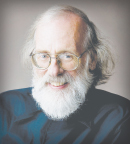
Tony Hunter, PhD
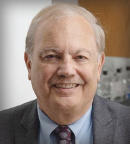
Dennis J. Slamon, MD, PhD
Tony Hunter, PhD
Dr. Hunter is the American Cancer Society Professor in the Molecular and Cell Biology Laboratory and holds the Renato Dulbecco Chair in Cancer Research at the Salk Institute for Biological Studies in La Jolla, California.
More than 40 years ago, Dr. Hunter discovered the molecular switch known as tyrosine phosphorylation, which led to the development of countless new cancer therapies that have saved lives. Like creatures of habit, cells repeat the same cycle, coordinating the timing of gene and protein activation with growth and division. When this cycle is disrupted, cells can begin copying the wrong genes, resulting in diseases such as cancer. They may turn on proteins at the wrong times or divide too quickly or too slowly. By understanding how a healthy cell controls its growth cycle, researchers can better understand what goes wrong in tumor cells when their growth spirals out of control.
Dr. Hunter discovered that the addition and subtraction of phosphate molecules to proteins on tyrosine—1 of the 20 amino acids—allows cells to control when key proteins are on standby and when they are active. In cancerous cells, growth was switched to always-on mode by malfunctions involving these phosphate molecules.
In the subsequent decades, Dr. Hunter’s laboratory has led the field in understanding how chemical additions to proteins control the cell cycle and growth. Dr. Hunter also helped explain how cells mobilize their repair crews to fix damaged DNA, which can prevent cells from turning cancerous.
In addition, he discovered how some cancers find a loophole in the cellular security system that helps them recover and resume dividing following treatment with DNA-damaging cancer drugs. In pancreatic cancer, for example, drugs cannot reach the tumor because of an inflammatory barrier created by crosstalk between the tumor and pancreatic cells. Dr. Hunter has found a way to intercept this communication using a signaling molecule called LIF, which become a useful biomarker in pancreatic cancer.
Dr. Hunter earned his undergraduate degree, with first-class honors, from the University of Cambridge, where he also earned his doctoral degree. He served as a postdoctoral fellow at The Salk Institute and University of Cambridge.
Dr. Hunter’s work has earned him more than 30 international honors and awards, including the American Association for Cancer Research Lifetime Achievement Award in Cancer Research, the Tang Prize in Biopharmaceutical Science, the Sjöberg Prize for Cancer Research, the Clifford Prize for Cancer Research, and the Wolf Prize in Medicine.
Dennis J. Slamon, MD, PhD
Dr. Slamon's transformational research led to the development of trastuzumab, the revolutionary breast cancer drug that has saved the lives of millions of women worldwide.
Working in his laboratory at the University of California, Los Angeles (UCLA), Dr. Slamon discovered that a mutation of the HER2/neu oncogene was present in more than a quarter of all breast cancers and was associated with a particularly fast-growing form of the disease. Armed with this knowledge, Dr. Slamon led the extensive laboratory work and clinical trials that showed a monoclonal antibody could be targeted directly at the HER2 receptor to stop its growth. For 12 years, Dr. Slamon and his colleagues conducted the laboratory and clinical research that led to the development of trastuzumab, which targets the specific genetic alteration found in approximately 25% of breast cancers. This discovery paved the way for continued development of treatment for additional types of cancers.
Dr. Slamon firmly believed in his laboratory’s research and spent more than a decade fighting relentlessly to develop trastuzumab and secure its approval by the U.S. Food and Drug Administration. In recognition of Dr. Slamon’s accomplishments, President Bill Clinton appointed him to the three-member President’s Cancer Panel in June 2000.
Dr. Slamon serves as Director of Clinical/Translational Research and Director of the Revlon/UCLA Women’s Cancer Research Program at UCLA’s Jonsson Comprehensive Cancer Center. He is a Professor of Medicine, Chief of the Division of Hematology/Oncology, and Executive Vice Chair for research for UCLA’s Department of Medicine. He also serves as Director of the medical advisory board for the National Colorectal Cancer Research Alliance.
Dr. Slamon is an honors graduate of the University of Chicago’s Pritzker School of Medicine, where he earned both his medical degree and doctorate in cell biology in 1975. He completed his internship and residency at the University of Chicago Hospitals and Clinics and became chief resident in 1978. One year later, he became a fellow in the Division of Hematology/Oncology at UCLA.
Dr. Slamon is the recipient, among other awards, of the Lasker-DeBakey Clinical Medical Research Award; the Szent-Györgyi Prize for Progress in Cancer Research; the Sjöberg Prize awarded by the Royal Swedish Academy of Sciences and the Sjöberg Foundation; Komen Brinker Award for Scientific Distinction; the Gairdner Foundation International Award; the Warren Alpert Foundation Scientific Prize, and the American Cancer Society Medal of Honor.
