
The ASCO Geriatric Oncology Community of Practice (geriatric oncology CoP) convened for its first in-person meeting at McCormick Place in Chicago in May 2026. Since its inception in 2022, the geriatric oncology CoP has brought together clinicians, researchers, trainees, and patient advocates committed to improving care for older adults with cancer. Until recently, most collaboration had occurred through virtual meetings. The in-person gathering marked a new phase in the geriatric oncology CoP’s development, including the formalization of a partnership with ASCO and renewed efforts to expand geriatric oncology expertise across the organization.
The older adult population in the United States is growing rapidly. As geriatric oncology braces for the “silver tsunami” over the next 2 decades, its expertise is becoming essential—not merely a specialty niche, but a mainstream necessity. At the patient level, this means older adults with cancer will need age-appropriate, evidence-based care that accounts for their unique medical, functional, and psychosocial needs. At the systems level, it means embedding geriatric expertise into cancer care delivery, research priorities, and quality standards.
Recognizing Excellence
These priorities are reflected in three complementary areas of leadership: patient advocacy, mentorship and research, and global engagement. Three individuals whose contributions exemplify these principles were honored at the 2026 ASCO Annual Meeting.
Patient-Centered Partnership: Beverly Canin, recipient of ASCO’s Patient Advocate Award, has been a breast cancer survivor since 2000. Her path into advocacy began with a simple, frustrating realization: she felt her physicians were not presenting her with all of her treatment options. That experience evolved into a sustained commitment to ensuring that patient perspectives help shape research priorities. She has played a pivotal role in many grants, including patient-centered initiatives led by Dr.
Supriya Mohile of the James P. Wilmot Cancer Center at the University of Rochester and the late Arti Hurria, MD. These efforts produced two lasting outcomes: the COACH Study, which helped inform how the field approaches geriatric assessment in cancer care, and Scoreboard, a Cancer and Aging Research Group patient advocacy group that keeps patient voices central to research and practice. In accepting her award, Ms. Cannon put it simply: “It’s because of you that I can do what I do. You are the people who respond and have engaged with patient advocates in a way that we’re all looking to have happen.”
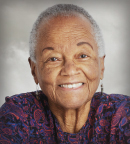
Beverly Canin
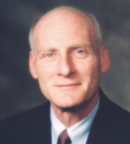
Harvey Jay Cohen, MD
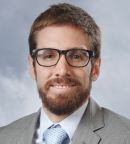
Enrique Soto Pérez de Celis, MD
Mentorship Across Generations: Harvey Jay Cohen, MD, the Walter Kempner Distinguished Professor at Duke University, is widely regarded as one of the foundational leaders of geriatric oncology in the United States. His pioneering work on geriatric assessment and aging in patients with cancer laid the groundwork for how the field approaches older patients today. As the first chair of the Cancer in Older Patients Group (CARG), established in 1995, he pioneered the integration of geriatrics into oncology at a time when the idea was considered radical. However, perhaps his most enduring impact has been his mentorship. He describes his relationship with the Dr. Hurria as an “academic father and child” partnership; Dr. Hurria, in turn, mentored others, creating what Dr. Cohen calls his “academic grandchildren and great-grandchildren.” He continues to participate in biweekly meetings of the Cancer and Aging Research Group, reflecting his longstanding commitment to the field.
Global Vision: Enrique Soto Pérez de Celis, MD, an Associate Professor at the University of Colorado Cancer Center, represents a new generation of leaders working to expand the global reach of geriatric oncology. As a young Fellow from Mexico attending his first ASCO Annual Meeting, he was welcomed warmly into the Cancer and Aging Research Group community, an experience he credits as transformative. He trained under Dr. Hurria and went on to establish the first geriatric oncology clinic in Mexico, a pioneering effort that has since influenced programs across Latin America. A recipient of the 2026 B.J. Kennedy Geriatric Oncology Award, Dr. Soto Pérez de Celis bridges geriatric oncology and global oncology through his work, helping to ensure that clinical guidelines and practices serve not only resource-rich settings but also resource-limited settings, where most older adults with cancer live. In his remarks, he pointed to what he sees as the community’s greatest strength: “the patients and the people who are working for this.”
Building the Infrastructure for Scale
William Dale, MD, PhD, FASCO, representing the Cancer and Aging Research Group in partnership discussions with ASCO leadership, outlined several interconnected initiatives that comprise the field’s strategic agenda: establishing the geriatric oncology CoP as the grassroots foundation; developing the first ASCO quality metric in geriatric oncology, led by Heidi Klepin, MD, MS, of Wake Forest University; formalizing geriatric representation on the Research Committee; embedding geriatric principles in ASCO’s care models; leveraging CMS age-friendly initiatives; expanding implementation of the PGA from academic centers such as City of Hope to community settings; and building capacity for geriatric oncology globally.
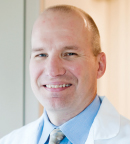
William Dale, MD, PhD, FASCO
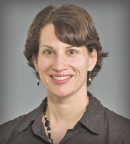
Heidi Klepin, MD, MS
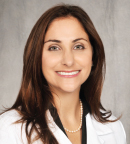
Amy Mackenzie, MD
The critical insight that emerged from the discussion is that these initiatives cannot succeed in isolation. Today, guidelines are developed separately from metrics, which in turn are developed separately from implementation efforts, leaving community oncologists overwhelmed by disconnected mandates that each add work without a clear sense of purpose. The solution is integration: guidelines to inform what geriatric assessment includes, quality metrics to measure PGA completion, financial incentives to reward compliance, and care models to embed geriatric principles throughout practice. As Dr. Dale put it, “Piecemeal at each place isn’t going to get the job done anymore. We have to have a strategy that connects the dots.”
Key Challenges and Solutions
Four recurring challenges emerged during the discussion, each accompanied by proposed solutions.
1. PGA Implementation in Community Practice: Busy oncologists report that the practical geriatric assessment feels like “another thing to do” in an already packed schedule. Amy Mackenzie, MD, of Thomas Jefferson University in Philadelphia, put it plainly: “There are a lot of barriers. It’s hard.” Participants identified two priorities: providing community practices with implementation support, including workflow templates, electronic health record optimization, training, and evidence of clinical benefit; and reframing geriatric assessment as an opportunity to improve care, with the goal of making it as routine as taking a blood pressure reading.
2. Career Development Funding: Although other research areas have endowed Career Development Awards, geriatric oncology still lacks a dedicated award. The proposal: ASCO should dedicate a Career Development Award to geriatric oncology. One community member pointed to a telling example of what sequential funding can accomplish: a $50,000 ASCO global oncology award funded a proof-of-concept study in Brazil, which in turn helped secure a $750,000 grant from the Rising Tide Foundation for a full randomized trial—momentum that a one-time grant could never have built.
3. Survivorship in Older Adults: As survival rates improve and the population ages, 60%–70% of cancer survivors will soon be aged 65 or older, yet long-term toxicity management remains fragmented across specialties, with no single party responsible for coordinating care. Proposed solutions include joint guidance documents from specialty societies with dedicated geriatric components, geriatric expertise represented on ASCO’s Survivorship Committee, and institutional multispecialty survivorship clinics built around coordinated care.
4. International Implementation and Global Capacity: Evidence supporting geriatric assessment is abundant, but access to geriatric assessment in resource-limited settings is not. The community identified clear needs: implementation research grants for resource-limited settings, educational programming for junior clinicians, and international distribution of tools such as the PGA. Existing platforms such as mycarg.org and siog.org already provide a foundation for partnership and scalability.
Looking Forward
The recent in-person gathering of the geriatric oncology CoP demonstrated a unity of purpose across strikingly different paths: Beverly Canin’s patient advocacy, Dr. Harvey Cohen’s legacy of mentorship, Dr. Enrique Soto Pérez de Celis’s global vision, and the collective efforts of clinicians, researchers, trainees, and advocates across the community. The seven initiatives outlined are ambitious, and the path forward will require substantial investment—but the demographic shift is underway, the evidence base already exists, and the field has the expertise, passion, and partnerships needed to lead this transformation.
Guest Editor
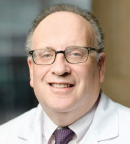
Stuart M. Lichtman, MD, FASCO
Dr. Lichtman is Attending Physician (retired) at Memorial Sloan Kettering Cancer Center, Commack, New York; Professor of Medicine at Weill Cornell Medical College, New York; a consultant for Wilmot Cancer Institute Geriatric Oncology Research; and Past President of SIOG. Geriatrics for the Oncologist is developed in collaboration with the International Society of Geriatric Oncology (SIOG).
Built on three pillars, education, research, and implementation, the ASCO geriatric oncology CoP has grown to include accomplished clinicians, researchers, trainees, patient advocates, and international partners. Today, it is positioned to move from dispersed grassroots efforts toward a coordinated approach to systemic change. The real work starts now: securing resources for these initiatives, operationalizing the partnership, and translating these priorities into measurable advances in research, education, and clinical care.
DISCLOSURE: Dr. Nikita reported no conflicts of interest.
Dr. Nikita is an Instructor in Medical Oncology at the Sidney Kimmel Comprehensive Cancer Center at Thomas Jefferson University. She serves as Co-President of the ASCO Geriatric Oncology CoP and focuses on pharmacoepidemiology, health economics, and geriatric oncology using real-world data sources.
