The ASCO Post
  • News
  • Insights
  • Meetings
  • Multimedia
  • ASCO AI in Oncology
  • Search
  • AI in Oncology
  • Bladder Cancer
  • Breast Cancer
  • Cardio-oncology
  • CNS Cancers
  • Colorectal Cancer
  • Cost of Care
  • Infectious Diseases
  • Gastrointestinal Cancer
  • Genomics/Genetics
  • Geriatric Oncology
  • Global Cancer Care
  • Gynecologic Cancers
  • Head and Neck Cancer
  • Health-Care Policy
  • Hepatobiliary Cancer
  • Immunotherapy
  • Kidney Cancer
  • Leukemia
  • Lung Cancer
  • Lymphoma
  • Multiple Myeloma
  • Myelodysplastic Syndromes
  • Neuroendocrine Tumors
  • Pancreatic Cancer
  • Prostate Cancer
  • Sarcoma
  • Skin Cancer
  • Survivorship
  • Thyroid Cancer
  • Solid Tumors
  • Hematologic Malignancies
  • Issues in Oncology
Advertisement
  1. The ASCO Post
  2. 2020 Snapshot: State of the Oncology Workforce in America
Direct From ASCO News From the Journals

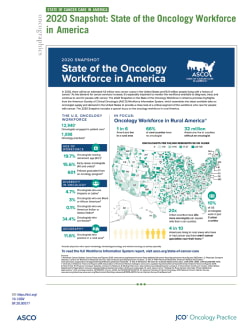
2020 Snapshot: State of the Oncology Workforce in America

October 25, 2020 By ASCO
Share Share via Email Share on Facebook Share on LinkedIn Share on X
Advertisement
Advertisement

Related Content

Gynecologic Cancers

Risovalisib Yields Highest Reported Monotherapy Response Rate in Ovarian Clear Cell Carcinoma

November 18

In a phase II trial, risovalisib yielded a 35% objective response rate in patients with recurrent or persistent PIK3CA -mutated ovarian clear cell carcinoma.

CNS Cancers

A ‘Split’ Decision: Fractionated vs Single-Fraction Radiosurgery After Brain Metastasis Resection

November 18

Among patients who underwent resection of a large (≥ 2 cm) brain metastasis, postoperative fractionated stereotactic radiosurgery (SRS) improved surgical bed control compared with single-fraction SRS without an apparent increase in toxicity. This was according to findings from the multicenter phase III Alliance A071801 trial.

Leukemia

Report Outlines ‘Evolutionary Dynamics’ in the Years Before AML Diagnosis

November 18

Scientists have reconstructed how acute myeloid leukemia (AML) develops over the decades before diagnosis, showing that in two-thirds of cases, the first cancer-driving mutation had been acquired before the age of 20—more than 50 years before the usual age of diagnosis.

Breast Cancer

I-SPY2.2: RT-DXd May Reduce Chemotherapy Exposure in Immune-Positive Early Breast Cancer

November 17

Neoadjuvant treatment with the immune-directed bispecific antibody rilvegostomig plus the antibody-drug conjugate fam-trastuzumab deruxtecan-nxki (RT-DXd) demonstrated “promising” activity with mostly low-grade adverse events in patients with immune-positive, ERBB2-negative early breast cancer, according to findings from the adaptively randomized, multicenter phase II I-SPY2.2 platform trial.
Advertisement
The ASCO Post
  • Facebook
  • Linked In
  • X
Subscribe to newsletter

About

  • About The ASCO Post
  • Editorial Board
  • Disclosures
  • Disclaimer
  • Contact
  • Advertising
  • Privacy Policy
  • Your Privacy Choices

American Society of Clinical Oncology

  • ASCO website
  • ASCO AI in Oncology
Copyright © 2026 Conexiant unless otherwise noted. All rights reserved. Reproduction in whole or in part without permission is prohibited.