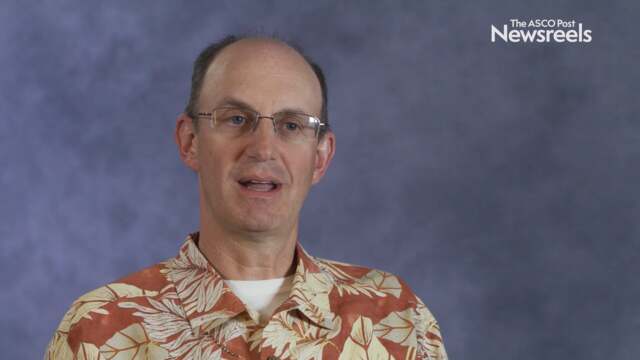
Philip J. Bierman, MD, on DLBCL: Managing Patients at Risk of CNS Involvement and Systemic Disease
Pan Pacific Lymphoma Conference 2018
Philip J. Bierman, MD, of the University of Nebraska Medical Center, discusses how to identify and treat the 1% to 2% of patients with diffuse large B-cell lymphoma who have central nervous system involvement as well as systemic sites at the time of diagnosis.
Peggy Burhenn, MS, RN-BC, AOCNS, of the City of Hope National Medical Center, discusses the challenges of working with older lymphoma patients and the importance of effective geriatric assessments.
John G. Gribben, MD, DSc, of the Barts Cancer Institute, discusses how understanding the role of the tumor microenvironment can help identify treatment targets, including combination therapies, and improve outcome for patients with indolent lymphomas.
Kieron M. Dunleavy, MD, of George Washington University, discusses the need for drug combinations to improve lymphoma therapy, despite unexpected toxicities, as our understanding of the molecular biology grows.
Laurie H. Sehn, MD, MPH, of the British Columbia Cancer Centre for Lymphoid Cancer, discusses the challenges of treating high-grade B-cell lymphoma in older patients and those with comorbidities. Several strategies have been devised, but more research is needed as well as more options for novel therapies.
Jonathan W. Friedberg, MD, of the University of Rochester Medical Center, discusses treatments that enhance progression-free and overall survival and clear minimal residual disease—obinutuzumab plus chemotherapy, lenalidomide, and rituximab—and the types of lymphoma patients who may benefit.