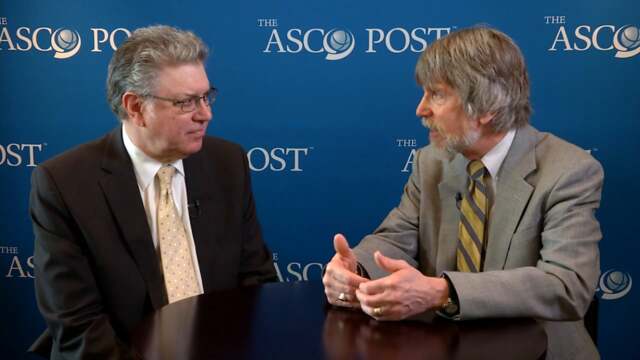
Samuel M. Silver, MD, PhD, and David S. Ettinger, MD, on the Characteristics of an Optimal Clinical Practice Guideline
2015 NCCN Annual Conference
Samuel M. Silver, MD, PhD, of the University of Michigan Comprehensive Cancer Center, and David S. Ettinger, MD, of The Sidney Kimmel Comprehensive Cancer Center at Johns Hopkins, discuss the evolution of the NCCN Guidelines, the importance of including palliative care and survivorship recommendations, and the use of the guidelines in community practices.
Leora Horn, MD, MSc
Leora Horn, MD, MSc, of the Vanderbilt-Ingram Cancer Center, discusses the range of treatment options for people with lung cancer, including third generation inhibitors, and the key clinical trials studying alternatives for patients with acquired resistance.
Robert W. Carlson, MD, and Lee N. Newcomer, MD, MHA
Robert W. Carlson, MD, Chief Executive Officer of the National Comprehensive Cancer Network, and Lee N. Newcomer, MD, MHA, of UnitedHealthCare, discuss the value of NCCN Guidelines in determining coverage decisions, the future of affordable care, bundled payments, and the clear value approach.
John A. Thompson, MD
John A. Thompson, MD, of the Fred Hutchinson Cancer Research Center and Seattle Cancer Care Alliance, discusses the latest immunotherapeutics for advanced melanoma, including pembrolizumab, trametinib, nivolumab, and dabrafenib.
Kenneth C. Anderson, MD
Kenneth C. Anderson, MD, of Dana-Farber/Brigham and Women’s Cancer Center, discusses the incredible progress made in treating multiple myeloma, with nine therapeutic options approved in the past decade, two drugs approved this year, and a number of new options on the horizon.
Samuel M. Silver, MD, PhD, and Al B. Benson III, MD, FACP, FASCO
Samuel M. Silver, MD, PhD, of the University of Michigan Comprehensive Cancer Center, and Al B. Benson III, MD, FACP, FASCO, of Robert H. Lurie Comprehensive Cancer Center of Northwestern University, discuss the evolution of NCCN Guidelines, which are available free online, and the components that make them effective: a multidisciplinary approach, the participation of patient advocates, consistency, and affordability of the evidence.