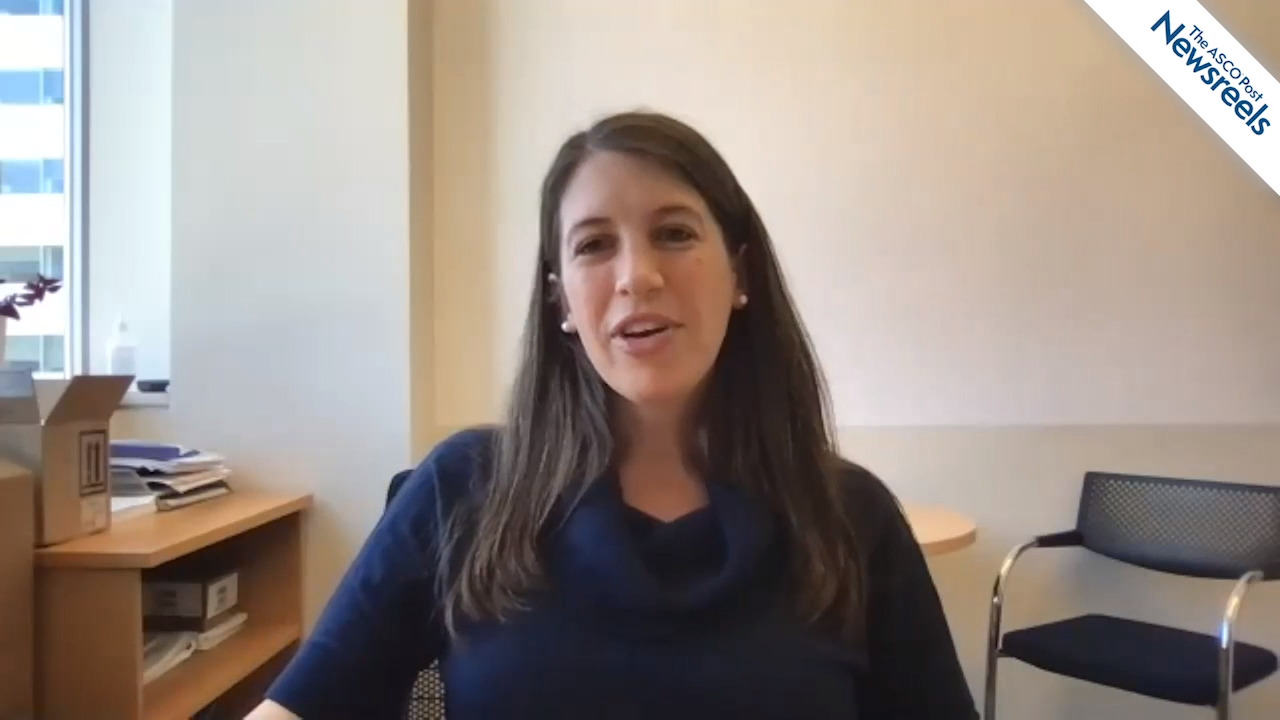
Joann G. Elmore, MD, MPH, on Cancer Diagnosis: When Pathologists Disagree, Artificial Intelligence May Help
AACR Annual Meeting 2021
Joann G. Elmore, MD, MPH, of the UCLA Fielding School of Public Health, discusses previous studies that show wide variability in cancer diagnoses, the uncertainties introduced by computer-aided detection tools, and new research on artificial intelligence and machine learning that may lead to more consistent and accurate diagnoses and prognoses, potentially improving treatment (Abstract SY01-03).
The ASCO Post Staff
Enrique Grande, MD, PhD, of The University of Texas MD Anderson Cancer Center, Madrid, discusses phase III overall survival results from the IMvigor130 study of atezolizumab plus platinum and gemcitabine vs placebo plus platinum and gemcitabine in patients with previously untreated metastatic urothelial carcinoma (Abstract CT187).
The ASCO Post Staff
Matthew J. Matasar, MD, of Memorial Sloan Kettering Cancer Center, discusses phase III results of the CHRONOS-3 trial, which showed that copanlisib plus rituximab led to a 48% reduction in the risk of disease progression or death compared with placebo plus rituximab in patients with relapsed indolent non-Hodgkin lymphoma (Abstract CT001).
The ASCO Post Staff
Charlotte E. Ariyan, MD, PhD, of Memorial Sloan Kettering Cancer Center, discusses improved outcomes with metastasectomy in the setting of checkpoint inhibitors, with the removal of residual disease and “escape” lesions. Surgical outcomes may also be better than targeted treatments, although long-term data and biomarkers are needed to confirm these findings.
The ASCO Post Staff
Rita Nanda, MD, of the University of Chicago, discusses the latest data on novel treatment strategies for triple-negative breast cancer, including immune checkpoint, PARP, and ATK inhibitors; antibody-drug conjugates; and targeting the androgen receptor.
The ASCO Post Staff
Katelyn T. Byrne, PhD, of the Perelman School of Medicine at the University of Pennsylvania, discusses the first in-depth analysis of the impact of selicrelumab, an anti-CD40 antibody, which was found to enrich T cells in pancreatic tumors, activate the immune system, and alter the tumor stroma (Abstract CT005).