Bijal D. Shah, MD, on CLL: CAR T-Cell Therapy With Brexucabtagene Autoleucel
2021 ASCO Annual Meeting
Bijal D. Shah, MD, of the H. Lee Moffitt Cancer Center, discusses phase II results of the ZUMA-3 study, which evaluated brexucabtagene autoleucel (KTE-X19), an anti-CD19 CAR T-cell therapy, in adults with relapsed or refractory B-cell acute lymphoblastic leukemia (Abstract 7002).
The ASCO Post Staff
Geoffrey J. Lindeman, MBBS, PhD, of Peter MacCallum Cancer Centre, discusses results from the phase II VERONICA study, which compared venetoclax plus fulvestrant with fulvestrant alone in women with estrogen receptor–positive, HER2-negative, locally advanced or metastatic breast cancer who experienced disease recurrence or progression during or after treatment with CDK4/6 inhibitor therapy (Abstract 1004).
The ASCO Post Staff
Ian Chau, MD, of Royal Marsden NHS Foundation Trust, discusses first results of the CheckMate 648 study, which showed that nivolumab plus chemotherapy and nivolumab plus ipilimumab both demonstrated superior overall survival vs chemotherapy alone in patients with advanced esophageal squamous cell carcinoma. These regimens may represent potential new first-line treatment options (Abstract 4001).
The ASCO Post Staff
Sumanta K. Pal, MD, of City of Hope, discusses results from a phase II study that sought to determine whether adding berzosertib, a selective ATR inhibitor, to the standard upfront chemotherapy regimen of cisplatin with gemcitabine may improve outcomes in patients with metastatic urothelial carcinoma (Abstract 4507).
The ASCO Post Staff
Terry P. Mamounas, MD, MPH, of the University of Florida Health Cancer Center, discusses results from the NRG Oncology/NSABP B-42 study, which examined the Breast Cancer Index and its ability to predict whether extended treatment with letrozole benefits patients with hormone receptor–positive breast cancer (Abstract 501).
The ASCO Post Staff
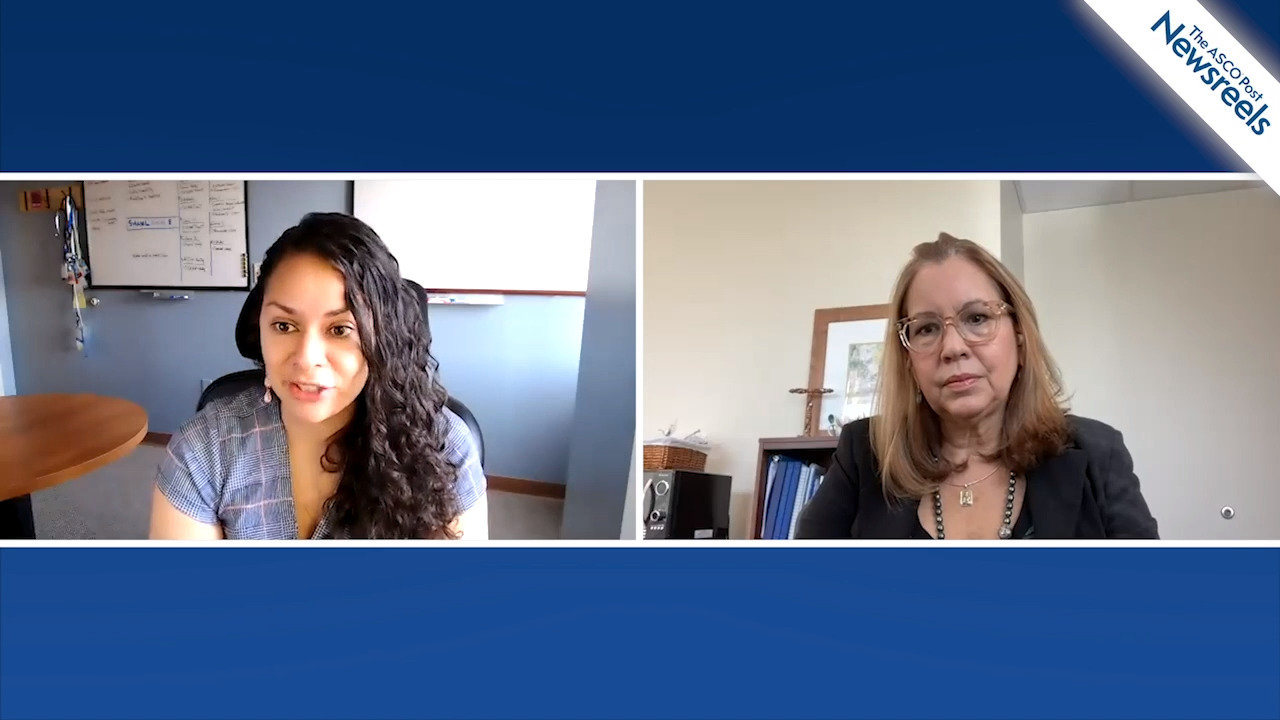
Narjust Duma, MD, of the Carbone Cancer Center at the University of Wisconsin, Madison, and Gladys I. Rodriguez, MD, of South Texas Oncology and Hematology, talk about the underrepresentation of Hispanic individuals in medicine, especially in oncology, and their efforts to create the first Young Investigator Award in Recognition of an Outstanding Latina Researcher to encourage Hispanic women to enter medicine and cancer research.