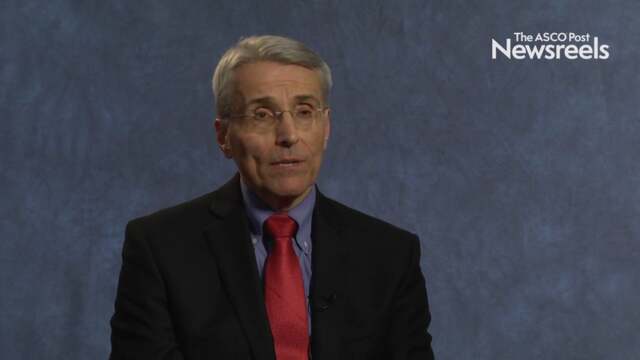
Lynn J. Howie, MD, on ER+ Metastatic Breast Cancer: An FDA Treatment Analysis
2017 San Antonio Breast Cancer Symposium
Lynn J. Howie, MD, of the U. S. Food & Drug Administration, discusses a pooled analysis of outcomes of older women with hormone receptor–positive metastatic breast cancer treated with a CDK4/6 inhibitor as initial endocrine-based therapy (Abstract GS5-06).
Joseph A. Sparano, MD, of Montefiore Medical Center/Albert Einstein College of Medicine, discusses findings that suggest circulating tumor cells 5 years after diagnosis are prognostic for late recurrence in operable stage II–III breast cancer (Abstract GS6-03).
Harold J. Burstein, MD, PhD, of the Dana-Farber Cancer Institute, discusses study findings on a comparison of adjuvant tamoxifen plus ovarian function suppression vs tamoxifen in premenopausal women with hormone receptor–positive breast cancer (Abstract GS4-03).
Lisa A. Carey, MD, of the University of North Carolina, discusses the long-term follow-up of CALGB 40502/NCCTG N063H, a phase III study of weekly paclitaxel compared with weekly nanoparticle albumin bound nab-paclitaxel or ixabepilone with or without bevacizumab as first-line therapy for locally recurrent or metastatic breast cancer (Abstract GS3-06).
Wolfgang Janni, MD, PhD, of Ulm University, discusses study findings that showed extended adjuvant bisphosphonate treatment over 5 years in early breast cancer does not improve disease-free and overall survival when compared with 2 years of treatment (Abstract GS1-06).
Richard Pazdur, MD, of the U.S. Food & Drug Administration’s Oncology Center of Excellence, discusses the rapid changes in evaluating and approving new and effective agents, incorporating the view of patients in the process, and modernizing clinical trial design with broader eligibility criteria.