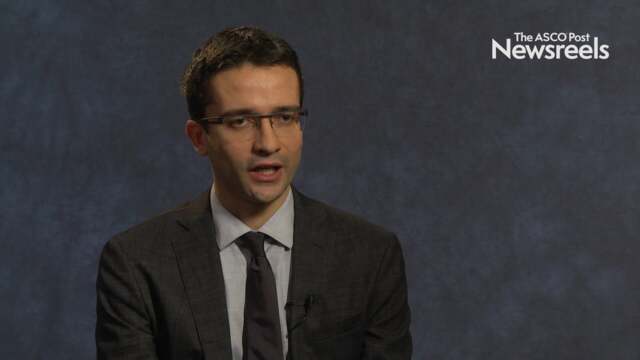
Elizabeth A. Mittendorf, MD, PhD, on Immunotherapy in Breast Cancer: Expert Perspective
2017 San Antonio Breast Cancer Symposium
Elizabeth A. Mittendorf, MD, PhD, of The University of Texas MD Anderson Cancer Center, discusses the growing role of immunotherapy in treating breast disease, the evidence of biomarkers that may be associated with response to therapy, and the opportunities to perform robust correlative studies.
Louis Fehrenbacher, MD, of Kaiser Permanente, discusses study findings comparing adjuvant chemotherapy with doxorubicin and cyclophosphamide followed by weekly paclitaxel—or docetaxel and cyclophosphamide—with or without a year of trastuzumab in women with node-positive or high-risk node-negative disease (Abstract GS1-02).
Silvia C. Formenti, MD, of Weill Cornell Medicine, discusses the high therapeutic potential of combining radiotherapy with immunotherapy and findings that show radiation dose and fractionation seem particularly relevant to the success of abscopal responses. The science has now matured to clinical translation.
Lee S. Schwartzberg, MD, of the West Cancer Center, discusses phase II study findings evaluating exemestane with or without enzalutamide in patients with hormone receptor–positive breast cancer (Abstract GS4-07).
Wolfgang Janni, MD, PhD, of Ulm University, discusses study findings that showed extended adjuvant bisphosphonate treatment over 5 years in early breast cancer does not improve disease-free and overall survival when compared with 2 years of treatment (Abstract GS1-06).
Matteo Lambertini, MD, of the Institut Jules Bordet, discusses the results of five clinical trials investigating temporary ovarian suppression with gonadotropin-releasing hormone analogs during chemotherapy as a strategy to preserve ovarian function and fertility in premenopausal early breast cancer patients (Abstract GS4-01).