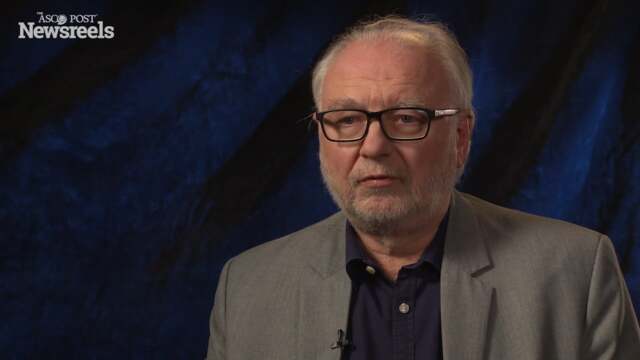
Bernard J. Escudier, MD, on Renal Cell Carcinoma: Results From the METEOR Trial
2016 Genitourinary Cancers Symposium
Bernard J. Escudier, MD, of the Institut Gustave Roussy, discusses a subgroup analyses of this phase III study of cabozantinib vs everolimus in patients with advanced renal cell carcinoma (Abstract 499). To see the French language version of this video, click here.
Fred Saad, MD
Fred Saad, MD, of the University of Montreal, summarizes his session on the latest treatment developments in prostate cancer, including the role of chemotherapy in hormone-sensitive disease. To see the French language version of this video, click here.
Christopher Brian Allard, MD
Christopher Brian Allard, MD, of Brigham & Women's Hospital, reports on results of the Physicians’ Health Study, which showed that regular aspirin use decreased the risk of lethal prostate cancer in a cohort of American doctors (Abstract 306).
Maha Hussain, MD
Maha Hussain, MD, of the University of Michigan, gives her expert perspective on changes in the treatment of hormone-naive disease.
Bishoy M. Faltas, MD
Bishoy M. Faltas, MD, of Weill Cornell Medical College, discusses his team’s work using whole exome sequencing, which may have important implications for selecting patients for immunotherapeutic approaches (Abstract 354).
David P. Dearnaley, MD
David P. Dearnaley, MD, of The Royal Marsden NHS Foundation Trust, discusses the comparison, in this study, of hypofractionated high-dose IMRT schedules for prostate cancer (Abstract 2).