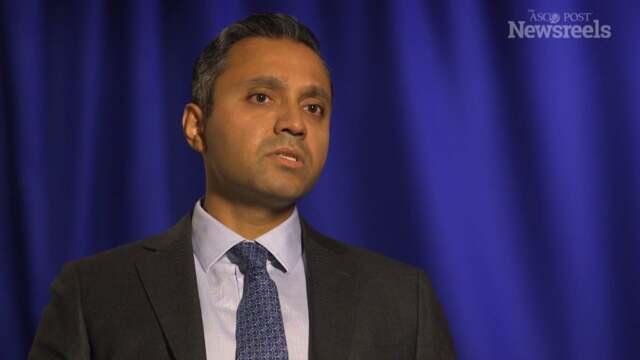
Melanie Royce, MD, PhD, on Breast Cancer: Results From the BOLERO-4 Trial
2016 ESMO Congress
Melanie Royce, MD, PhD, of the University of New Mexico, discusses phase II study findings on first-line everolimus plus letrozole in patients with ER+, HER2− advanced breast cancer. (Abstract 222O)
Alain Ravaud, MD, PhD, of Bordeaux University Hospital, discusses in French phase III findings on sunitinib vs placebo as adjuvant treatment for high-risk renal cell carcinoma after nephrectomy. (Abstract LBA11)
Omid Hamid, MD, of The Angeles Clinic and Research Institute, discusses survival data from this clinical trial on pembrolizumab vs investigator-choice chemotherapy for ipilimumab-refractory melanoma. (Abstract 1107O) Follow him on Twitter: @omidhamidmd
Heinz-Josef Lenz, MD, of the University of Southern California Norris Comprehensive Cancer Center, discusses the importance of tumor location, and its implications for treatment, in right-sided and left-sided metastatic colon cancer.
Susana N. Banerjee, PhD, MBBS, of The Royal Marsden NHS Foundation Trust, discusses phase II findings on abiraterone in patients with recurrent epithelial ovarian cancer. (Abstract LBA33)
Arjun V. Balar, MD, of the NYU Perlmutter Cancer Center, discusses preliminary phase II study findings on pembrolizumab as first-line therapy for advanced/unresectable or metastatic urothelial cancer. (Abstract LBA32)