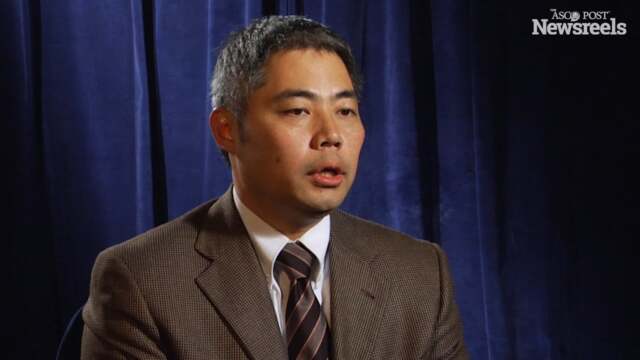
Supriya Chopra, MD, on Reducing Late Bowel Toxicity in Cervical Cancer
2015 ASTRO Annual Meeting
Supriya Chopra, MD, of Tata Memorial Hospital, discusses results of the PARCER study, which compared conventional 3D conformal radiotherapy to image-guided intensity-modulated radiotherapy in reducing bowel side effects for women with cervical cancer (Abstract 8).
Bridgett Harr, CNP
Bridgett Harr, CNP, of Cleveland Clinic, discusses the advanced practice nurse follow-up clinic, which focuses on symptom management in the first 90 days postchemoradiation (Abstract 3169).
Brian D. Kavanagh, MD
Brian D. Kavanagh, MD, of the University of Colorado School of Medicine, summarizes three papers: outcomes for locally advanced non–small cell lung cancer, 3D CRT vs image-guided intensity-modulated radiotherapy for reducing bowel toxicity, and dexamethasone for controlling pain flares in patients with bone metastases (Abstracts 2, 8, LBA6663).
James B. Yu, MD
James B. Yu, MD, of Yale School of Medicine, summarizes the plenary lecture on results from the NRG Oncology/phase III study comparing two fractionation schedules for low-risk prostate cancer (Abstract LBA6).
Howard M. Sandler, MD
Howard M. Sandler, MD, of Cedars-Sinai Medical Center, discusses this phase III noninferiority study comparing two fractionation schedules in patients with low-risk prostate cancer (Abstract LBA6).
Samuel Chao, MD
Samuel Chao, MD, of Cleveland Clinic, discusses the QMAP program and data-driven management, which offer ways to improve consistency and drive quality in radiation oncology departments (Abstract 39).