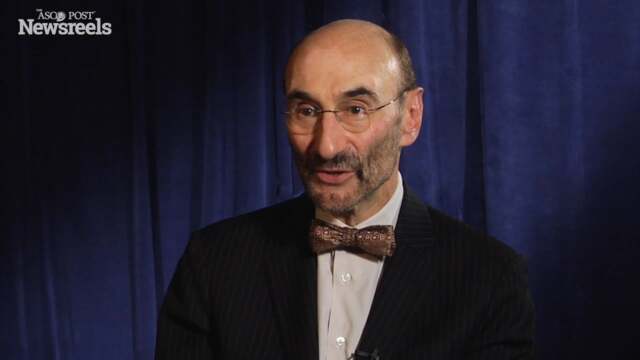
Roy Decker, MD, PhD, on Chemoradiation in Elderly Patients With Limited-Stage SCLC
2015 ASTRO Annual Meeting
Roy Decker, MD, PhD, of Yale University School of Medicine, discusses a National Cancer Database analysis that showed elderly patients with limited-stage small cell lung cancer can benefit from adding concurrent radiation to chemotherapy (Abstract 1010).
Bridgett Harr, CNP
Bridgett Harr, CNP, of Cleveland Clinic, discusses the advanced practice nurse follow-up clinic, which focuses on symptom management in the first 90 days postchemoradiation (Abstract 3169).
Stephen G. Chun, MD
Stephen G. Chun, MD, of MD Anderson Cancer Center, discusses the comparison of 3D conformal and IMRT outcomes for locally advanced non-small cell lung cancer (Abstract 2).
Leonard Gunderson, MD
Leonard Gunderson, MD, of the Mayo Clinic College of Medicine, discusses PET/CT imaging in upper and lower gastrointestinal cancers, which can be of value as a baseline study prior to treatment, in determining the degree of response to treatment, and in helping decide whether there is a relapse after a complete response to treatment.
Samuel Chao, MD
Samuel Chao, MD, of Cleveland Clinic, discusses the QMAP program and data-driven management, which offer ways to improve consistency and drive quality in radiation oncology departments (Abstract 39).
Bruce Minsky, MD
Bruce Minsky, MD, of MD Anderson Cancer Center, discusses two important papers: results from a prospective trial on quality-of-life outcomes for low-risk HPV-associated oropharyngeal squamous cell carcinoma, and a prostate cancer radiation therapy study (Abstracts 3, 4).