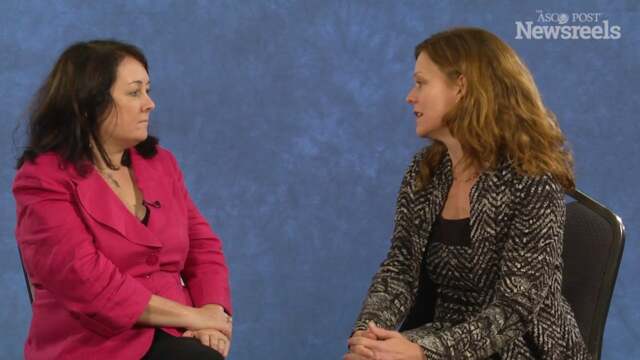
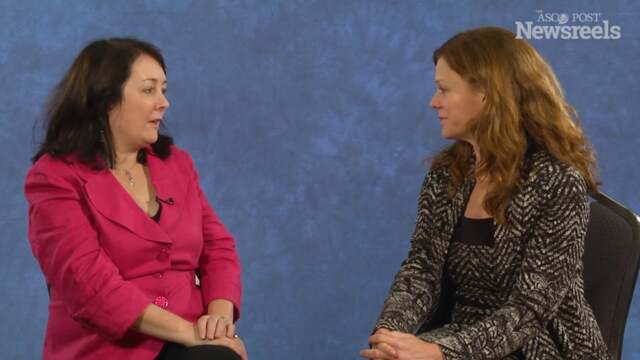
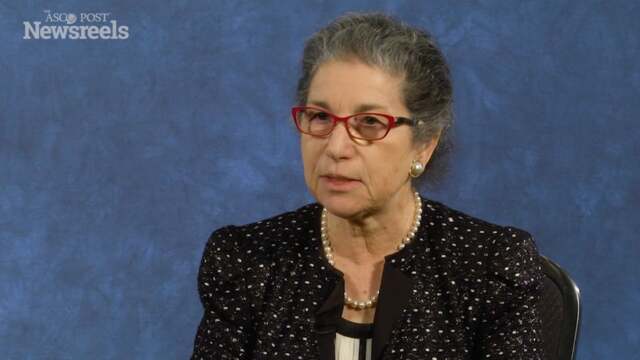
Lisa A. Carey, MD, and Ingrid A. Mayer, MD, on Triple-Negative Breast Cancer: Treatment Challenges
2016 San Antonio Breast Cancer Symposium
Lisa A. Carey, MD, of the University of North Carolina, and Ingrid A. Mayer, MD, of the Vanderbilt-Ingram Cancer Center, discuss the current studies on neoadjuvant systemic treatment in the triple-negative disease setting.
Ruth O’Regan, MD, of the University of Wisconsin, and Ann H. Partridge, MD, of the Dana-Farber Cancer Institute, discuss study findings on the prognostic associations of TILs in metastatic HER2-positive breast cancer (Abstract S1-04).
Aleix Prat, MD, PhD, of the University of Barcelona, discusses study findings on intrinsic subtype as a predictor of pathologic complete response following neoadjuvant dual HER2 blockade without chemotherapy in HER2-positive breast cancer (Abstract S3-03).
Ruth O’Regan, MD, of the University of Wisconsin, and Ann H. Partridge, MD, of the Dana-Farber Cancer Institute, discuss study findings from a session Dr. O’Regan moderated on three major trials addressing anastrozole after tamoxifen in HR-positive early breast cancer, letrozole in HR-positive disease, and extended letrozole treatment after adjuvant endocrine therapy (Abstracts S1-03, S1-05, S1-08).
Sara A. Hurvitz, MD, of the UCLA Jonsson Comprehensive Cancer Center, discusses findings on the biological effects of abemaciclib in a neoadjuvant study for postmenopausal patients (Abstract S4-06).
Patricia A. Ganz, MD, of the UCLA Jonsson Comprehensive Cancer Center, summarizes two studies on using duloxetine for aromatase inhibitor–associated musculoskeletal symptoms, and aromatase inhibitors’ effect on endothelial function and heart disease (Abstracts S5-06 and S5-07).