Howard Jack West, MD, on New Kinase Targets for Treating Advanced NSCLC
2015 IASLC World Conference on Lung Cancer
Howard Jack West, MD, of the Swedish Cancer Institute, summarizes three important papers: anlotinib as third-line treatment for refractory advanced non–small cell lung cancer; the EGFR exon 20 mutation as a prognostic/predictive biomarker; and EGFR exon 18 mutations as molecular predictors of sensitivity to afatinib or neratinib (Abstracts ORAL 3.01, 3.02, and 3.03).
Everett E. Vokes, MD
Everett E. Vokes, MD, of the University of Chicago, summarizes expert views on treating stage IIIA disease: decision-making in selecting patients for surgery; multiple-modality choices; and using induction chemotherapy (Abstract ED10).
Jennifer King, PhD
Jennifer King, PhD, of the Lung Cancer Alliance, gives her perspective on major themes of this year’s meeting: the stigma of lung cancer, the changing face of who is affected, early detection, and advances in immunotherapy.
Guneet Walia, PhD
Guneet Walia, PhD, of the Lung Cancer Foundation, summarizes some key presentations: bridging the quality chasm, patients’ attitudes and physicians’ perceptions on maintenance therapy, and patient advocacy.
William D. Travis, MD
William D. Travis, MD, of Memorial Sloan Kettering Cancer Center, gives an update on the WHO classification, which is crucial for optimal personalized treatment of lung cancer patients (Abstract PLEN02.01).
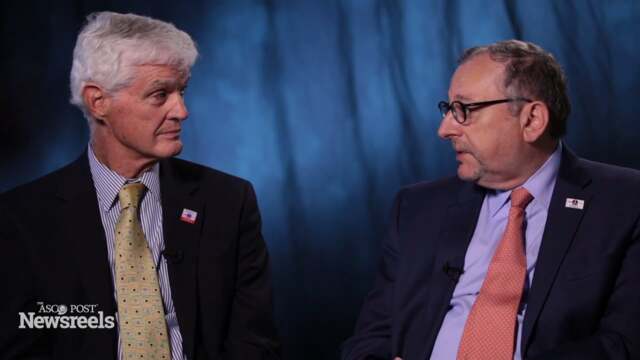
Fred R. Hirsch, MD, PhD and Paul A. Bunn, Jr., MD
Fred R. Hirsch, MD, PhD, of the University of Colorado Health Science Center, and Paul A. Bunn, Jr, MD, of the University of Colorado Cancer Center, give their views on the goals and important presentations of the 2015 World Conference on Lung Cancer.