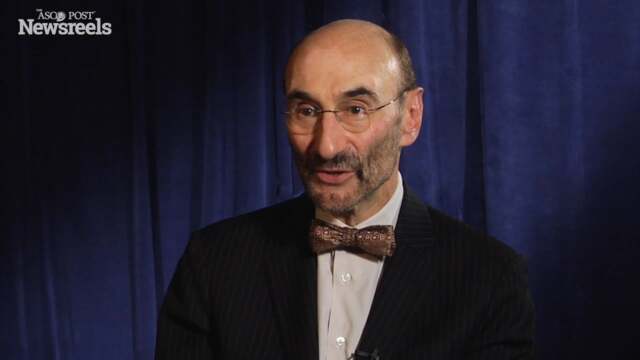
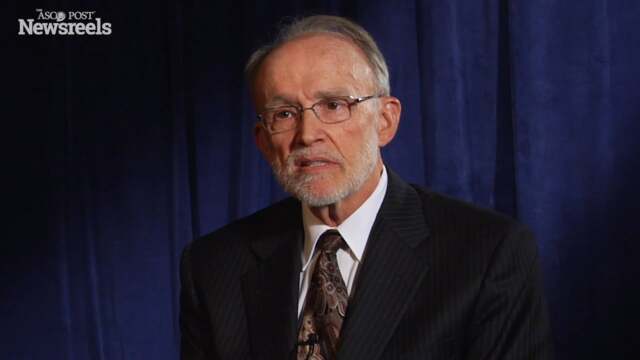
Anthony Zietman, MD, on Hormonal Therapy and Salvage Radiation: Results of RTOG 9601
2015 ASTRO Annual Meeting
Anthony Zietman, MD, of Massachusetts General Hospital, discusses his perspective on the study of bicalutamide during and after radiotherapy in patients following radical prostatectomy and a biochemical relapse (Abstract LBA5).
Bruce Minsky, MD
Bruce Minsky, MD, of MD Anderson Cancer Center, discusses two important papers: results from a prospective trial on quality-of-life outcomes for low-risk HPV-associated oropharyngeal squamous cell carcinoma, and a prostate cancer radiation therapy study (Abstracts 3, 4).
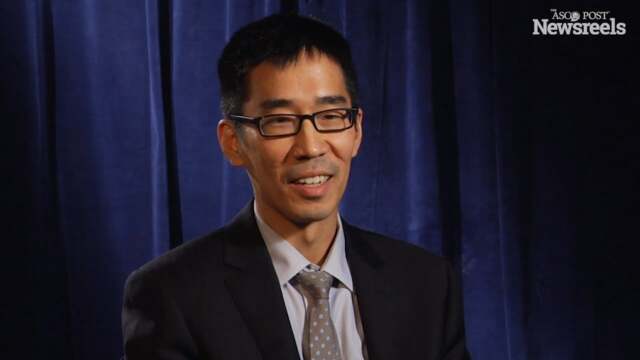
James B. Yu, MD
James B. Yu, MD, of Yale School of Medicine, summarizes the plenary lecture on results from the NRG Oncology/phase III study comparing two fractionation schedules for low-risk prostate cancer (Abstract LBA6).
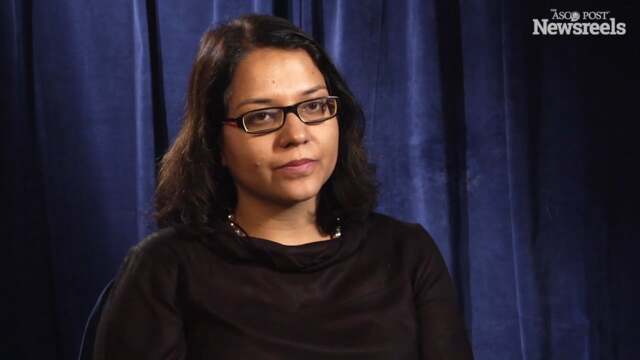
Supriya Chopra, MD
Supriya Chopra, MD, of Tata Memorial Hospital, discusses results of the PARCER study, which compared conventional 3D conformal radiotherapy to image-guided intensity-modulated radiotherapy in reducing bowel side effects for women with cervical cancer (Abstract 8).
Jay Harris, MD
Jay Harris, MD, of Dana-Farber Cancer Institute and Brigham and Women’s Hospital, discusses the difficulty reconciling recent important trials on radiotherapy for breast cancer: The Z11 trial suggested that breast tangents are sufficient, while MA.20 and EORTC studies suggested that full nodal irradiation is beneficial.
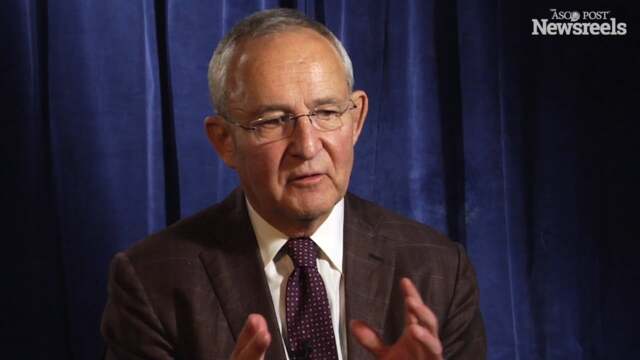
Leonard Gunderson, MD
Leonard Gunderson, MD, of the Mayo Clinic College of Medicine, discusses PET/CT imaging in upper and lower gastrointestinal cancers, which can be of value as a baseline study prior to treatment, in determining the degree of response to treatment, and in helping decide whether there is a relapse after a complete response to treatment.