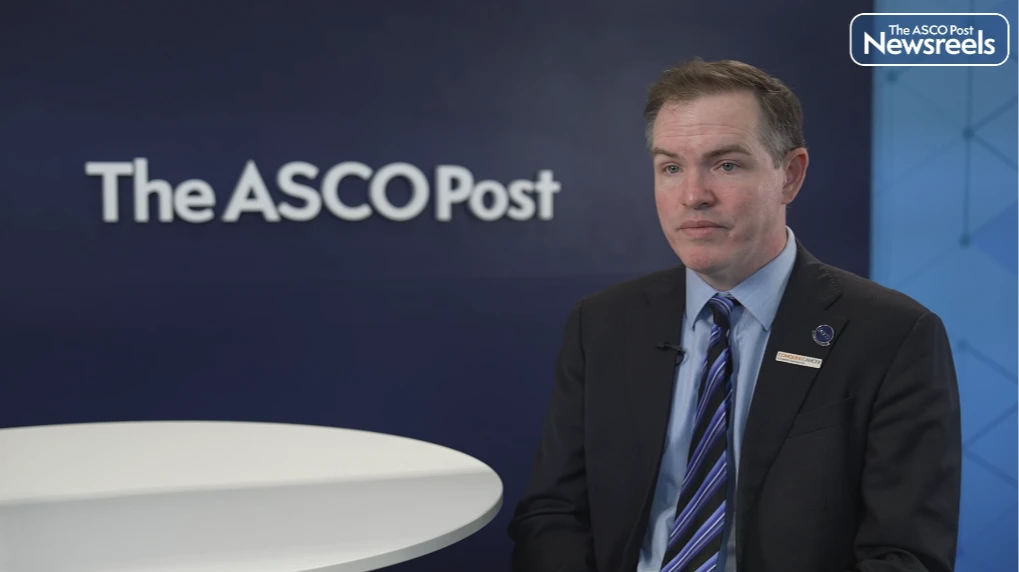
Asaf Maoz, MD, on Pancreatic Cancer Screening: Potential Blood-Based Biomarkers
ASCO 2026
Asaf Maoz, MD, of Dana-Farber Cancer Institute, Mass General Brigham, and Harvard Medical School, talks about whether prospective assessment of CA 19-9 has utility as part of pancreatic cancer surveillance among high-risk individuals (Abstract 10527).
Daneng Li, MD, of City of Hope, discusses dose-finding results from a phase I/II trial of tegavivint, a downstream Wnt/β-catenin inhibitor, in patients with advanced hepatocellular carcinoma (HCC) (Abstract 4015).
The ASCO Post Staff
François-Clément Bidard, MD, PhD, of Institut Curie, presents final progression-free survival 2 findings from the phase III SERENA-6 trial, which investigated the efficacy of camizestrant, a selective estrogen receptor degrader (SERD), vs continued aromatase inhibition in patients with advanced breast cancer with emergent ESR1 mutations. Earlier reports from the trial showed improved progression-free survival with the SERD (Abstract LBA1007).
The ASCO Post Staff
Mark A. Dickson, MD, of Memorial Sloan Kettering Cancer Center, presents findings from SARC041, a phase III randomized double-blind study of abemaciclib vs placebo in patients with dedifferentiated liposarcoma; patients who received abemaciclib experienced a statistically significant improvement in progression-free survival (Abstract LBA2).
The ASCO Post Staff
Yashasvini Sampathkumar, MD, of Memorial Sloan Kettering Cancer Center, presents data on Talking to Employers and Medical Staff about Work (TEAMWork), an English/Spanish intervention. The English/Spanish intervention, delivered as a booklet or mobile app, was developed to improve work outcomes among women undergoing breast cancer therapy. Dr. Sampathkumar discusses whether the digital vs print format was preferable among this population (Abstract 11060).
The ASCO Post Staff
Jason R. Westin, MD, FASCO, of The University of Texas MD Anderson Cancer Center, provides an update on the safety and efficacy data from the phase III SUNMO trial, which compared mosunetuzumab and polatuzumab vedotin vs rituximab, gemcitabine, and oxaliplatin in patients with relapsed or refractory large B-cell lymphoma (LBCL) (Abstract 7007).